The Fleming Family
The earliest known owner of the Louhisaari estate was Elin, whose surname remains unknown. In the mid-15th century, she married Magnus Fleming, a man of noble birth. Through this marriage, the estate passed to the Fleming family and remained in the family until 1791.
Many of the Flemings of Louhisaari (barons of Liperi in 1651) rose to leading positions in Sweden-Finland during the 16th and 17th centuries and had a decisive influence on the fate of their homeland. The most notable among them were Herman Persson Fleming (d. 1583), a confidant of Gustav Vasa, Privy Councilor, Colonel of Finland, Admiral, and commander of the castles of Häme, Tallinn, and Viipuri, as well as Governor of Finland, and his grandson, Clas Larsson Fleming (b. 1592 in Louhisaari, killed in action at the Battle of Fehmarn in 1644), who served as Privy Councilor, Commander-in-Chief of Stockholm, and Admiral.
Clas Fleming’s son, Admiral, President of the Chamber College, and Governor-General of Finland Herman Classon Fleming (1619–1673) had Louhisaari Castle built. Herman Fleming rose rapidly through the ranks and gained the particular favor of Charles X Gustav. However, while serving as chairman of the council established for the quarter-reformation, Fleming incurred the wrath of his peers in the nobility and, following the king’s death (1660), was removed from his duties as treasurer and from membership in the regency government. Herman Fleming was appointed Governor-General of Finland, a position he held until 1669. He married Christina Rosladin in 1645.
The subsequent Flemings lived at Louhisaari only occasionally. During the Great Northern War, the estate fell into disrepair and stood vacant until 1738, when the builder’s grandson, the Carolinian Clas Hermansson Fleming (1685–1766), inherited the estate as a collateral inheritance and had the castle restored. During the time of his son, courtier Herman Classon Fleming (1734–1789)—known as “the last wealthy Fleming”—a lavish lifestyle was enjoyed at the estate. The castle was remodeled during his tenure. However, due to debts, Herman Fleming’s estate was forced to sell Louhisaari in 1791. The new owner, Lieutenant Colonel C. Fr. von Knorring, had the castle thoroughly renovated in 1792. In the following years, Louhisaari changed hands again until Mannerheim, who had settled in Finland, purchased it in 1795.
Louhisaari in the Mannerheim family (1795–1903)
Major Carl Eric Mannerheim (1759–1837), who moved to Finland in 1783, participated in the Anjala League and, after 1808, held many important administrative and governmental positions to secure Finland’s autonomous status. In recognition of his achievements, he was elevated to the rank of count in 1824. After marrying Wendla Sofia von Willebrand in 1796, he settled with his family in Louhisaari, where he took a particular interest in promoting agriculture and gardening. Their son, Carl Gustaf Mannerheim (1797–1854), served as a provincial governor and president of the Viipuri Court of Appeal, and achieved worldwide renown as an entomologist. In 1832, he married Eva Wilhelmina von Schantz (d. 1895).
Their son, the father of the Finnish Marshal, Carl Robert Mannerheim (1835–1914), a businessman, owned Louhisaari until 1881, when, due to financial difficulties, he sold the estate to his sister Eva Wilhelmina (1836–1905). She sold the estate in 1903 and moved to Sweden. Finnish Marshal Carl Gustaf Emil Mannerheim was born in Louhisaari on June 4, 1867, as the third child of Carl Robert Mannerheim and Helena von Julin. The Marshal’s sister, Eva Mannerheim-Sparre, provides a charming picture of the childhood of the seven siblings in Louhisaari in her memoir, “Barndomsminnen.”
Louhisaari in the Hannus family from 1903 to 1961
Economic Counselor Oskar Hannus and, after his death, his daughter, Mrs. Inkeri Hovinen (d. 1966), owned Louhisaari until 1961, when the Finnish Marshal’s Equestrian Statue Committee purchased Louhisaari Manor and the 7.5-hectare park area with its tree-lined avenues and donated them to the Finnish state.
The Finnish Heritage Agency era, beginning in 1961
Louhisaari Manor was transferred on July 1, 1961, to the administration of the Committee for Archaeological Research, now the Finnish Heritage Agency, which restored the castle from 1962 to 1967. The main building of Louhisaari Manor was opened to the public as a museum on June 1, 1967. The National Museum of Finland is responsible for the museum operations at Louhisaari Manor.
Construction history
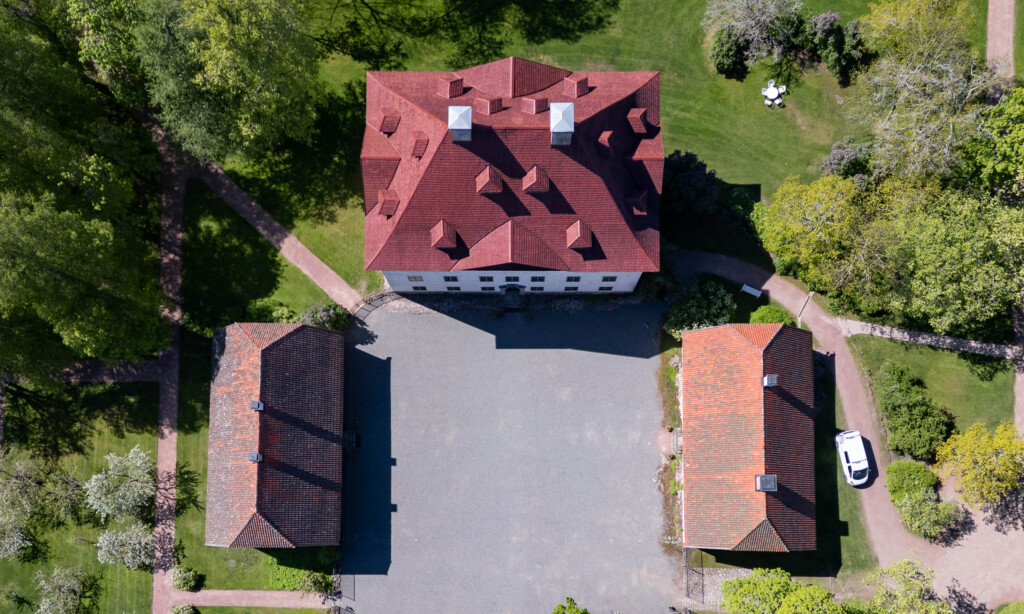
Louhisaari and Sarvilahti in Pernaja, built twenty years later, are the only manor houses in Finland that represent Dutch Classicism—a..
Architecture and interior design
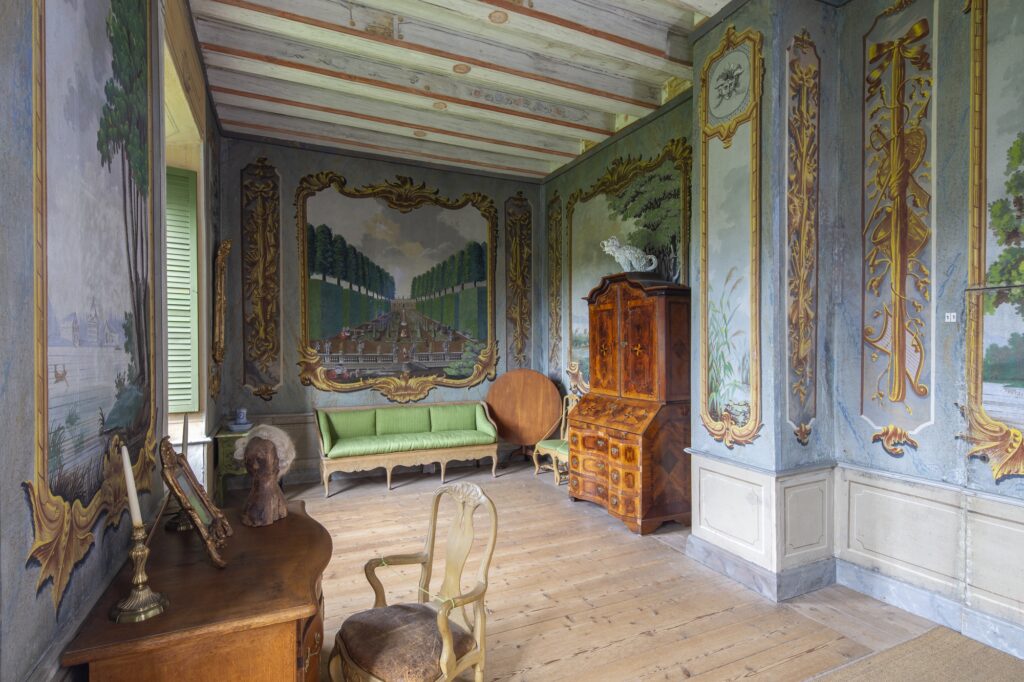
With its unique, refined Baroque architecture, Louhisaari offers a rare, immersive experience in Finland. Explore the manor house’s interiors, which..