Famine year casts a long shadow
The spring of 1867 was exceptionally cold in Finland. The ground remained frozen far longer than usual, spring work in the fields was delayed, and sowing did not begin until late June. In early September, a severe frost destroyed a large proportion of the rye and barley harvest. Famine had become a reality.
The situation was exacerbated by the fact that grain stocks had run out as a result of several consecutive years of poor harvests. Grain purchased from abroad could not be imported because the sea froze over early. Options were quickly running out. There was only one course of action left: to make do with emergency food.
In the food culture of the common people, the pettu (bread made from the inner bark of trees) was a common emergency food, but in the summer of 1867 the authorities and the educated classes certainly did not encourage people to gather pettu. Scholars regarded birch bark as an unhealthy food and believed that gathering it was harmful to the forests. It was therefore decided to replace pettu with other sources of nutrition. The aim was to replace pettu with lichen and mushrooms.
Lichen and mushrooms were not new sources of emergency food. The first recipes for lichen bread were published in Finland as early as 1798, when the Finnish Economic Society printed an educational pamphlet in Swedish and Finnish. Before the autumn of 1867, however, there was a prevailing sense of fear and aversion towards lichen bread amongst the people. People regarded lichen as nothing more than a way to fill their stomachs, believing it had no nutritional value. Mushrooms were eaten only in Eastern Finland; in Western Finland, they were shunned and regarded as pig feed.
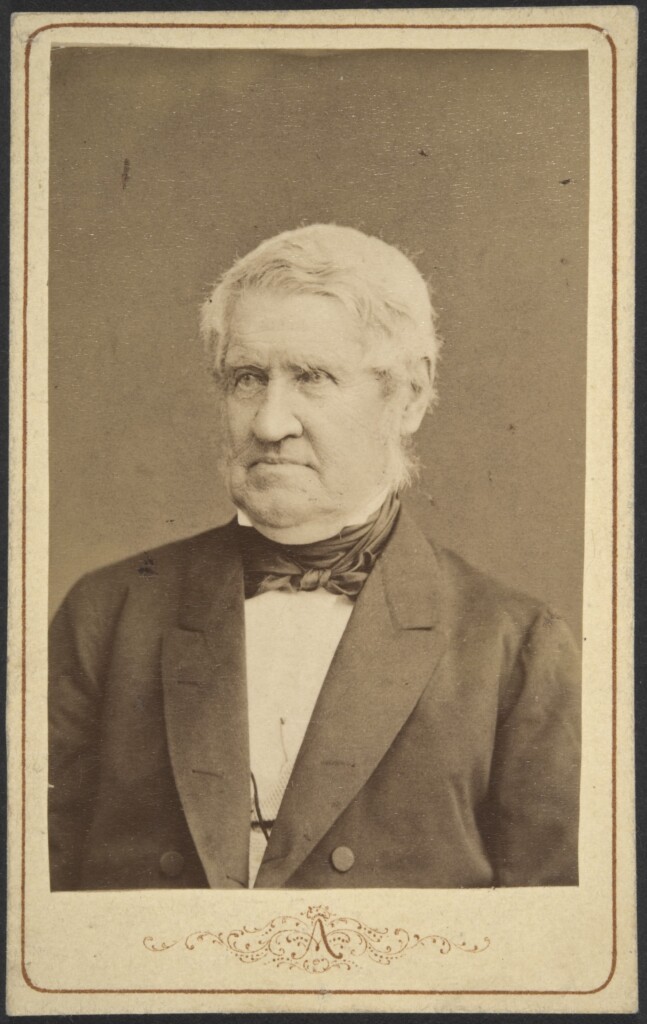
Erik Julin, Commercial Counsellor, who donated the emergency cupboard and the samples, in the late 1860s. Photo: Aunes Fotografi Atelier. The collections of the Finnish Heritage Agency.
Erik Julin from Turku fights hunger
Erik Julin, a commercial counsellor from Turku, realised as early as the summer of 1867 that a famine was on the horizon and took action. He was critical of traditional pettu bread and sought out healthier alternatives. Together with the Turku County medical officer Elfving, Mrs Gylling and alderman Wikeström, he set up a committee in Turku to promote the use of lichen and mushrooms as emergency food. The aim was to make use of readily available natural resources, but there were only a few months left before winter.
A training bakery was set up by the committee. There, people were taught how to identify and prepare lichens and mushrooms, and how to cook various dishes. Participants in the training bakery courses were recruited through newspaper advertisements. The courses lasted two weeks and were attended mainly by women from the Turku and Pori regions. After the course, the participants were sent back to their home regions to pass on what they had learnt.
Julin’s committee and training bakery served as a model for other towns as well, and soon similar committees and bakeries were set up in different parts of the country.
Education
Education about the use of lichens and mushrooms was also carried out more widely throughout society. Churches served as key centres for disseminating information, with instructions being handed out and samples of emergency food – emergency bread and flour – put on display.
Julin’s committee drew up and distributed its own leaflet, A Word to the Finnish People (1867), in which people were encouraged to make use of lichen and mushrooms. In another leaflet, the committee urged people to grind barley chaff into flour and mix it with lichen and rye flour. The second leaflet and the flour samples also found their way to Pekkola Manor in Ruovesi, from where they were donated to the collections of the National Museum of Finland.
Newspapers also played a part in raising public awareness by publishing articles on committees and nutritional substitutes. They provided advice on various methods of making emergency bread and encouraged people to attend courses at the training bakeries.
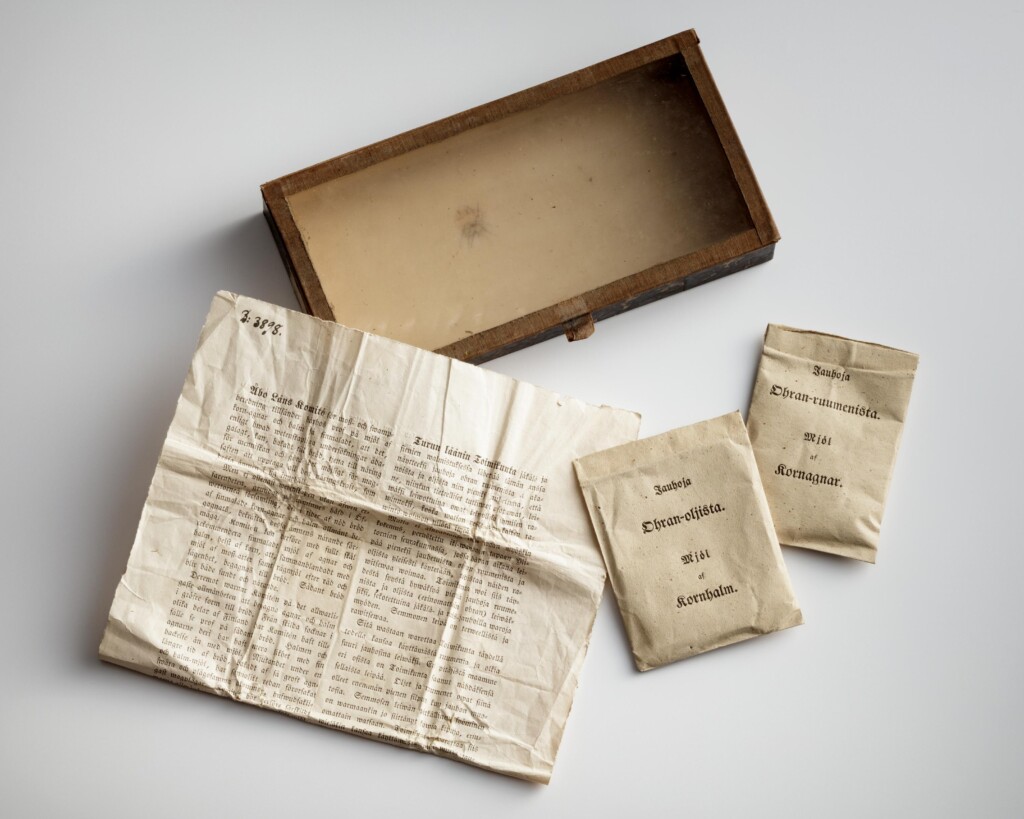
A leaflet signed by Erik Julin in 1867 and two bags containing emergency flour also reached the residents of the Pekkola Manor in Ruovesi (KB3989). Photo: Ilari Järvinen, Finnish Heritage Agency.
Project’s decline
As autumn wore on, hope began to fade. The first snow covered the ground quite early, and it was no longer possible to gather lichen. At the same time, suspicions and rumours about the harmful effects of lichen bread grew stronger. Lichen bread was suspected of causing health problems: stomach cramps, blindness and even death.
The rumours and suspicions were not entirely unfounded. The bitter and toxic acid contained in the lichen required careful pre-treatment, which was not always carried out correctly. Furthermore, it proved difficult to distinguish between the different species of lichen. For an emaciated person, bread contaminated with lichen acid could prove fatal.
Cupboard as a reminder of famine
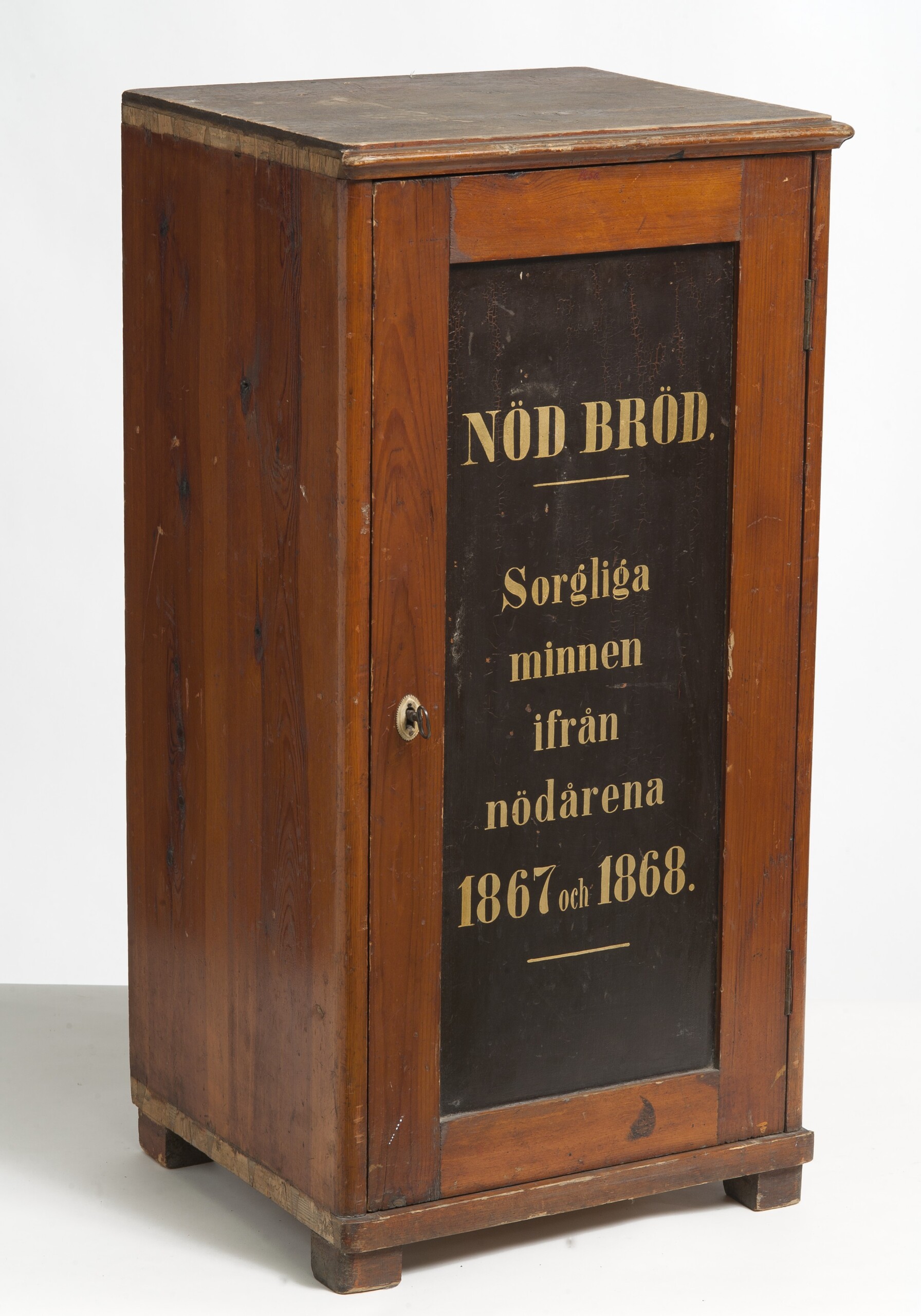
Erik Julin compiled a sample collection of artefacts from the famine years, placed it in the cupboard and donated it to the university’s ethnographic collection (now part of the collections of the National Museum of Finland) in 1872. The following is written on the cupboard door: Nödbröd, sorgliga minnen ifrån nödårena (in English: “Emergency bread, sad memories from the years of hardship”, as well as the dates 1867–1868, which refer to the most devastating famine years in Finnish history.
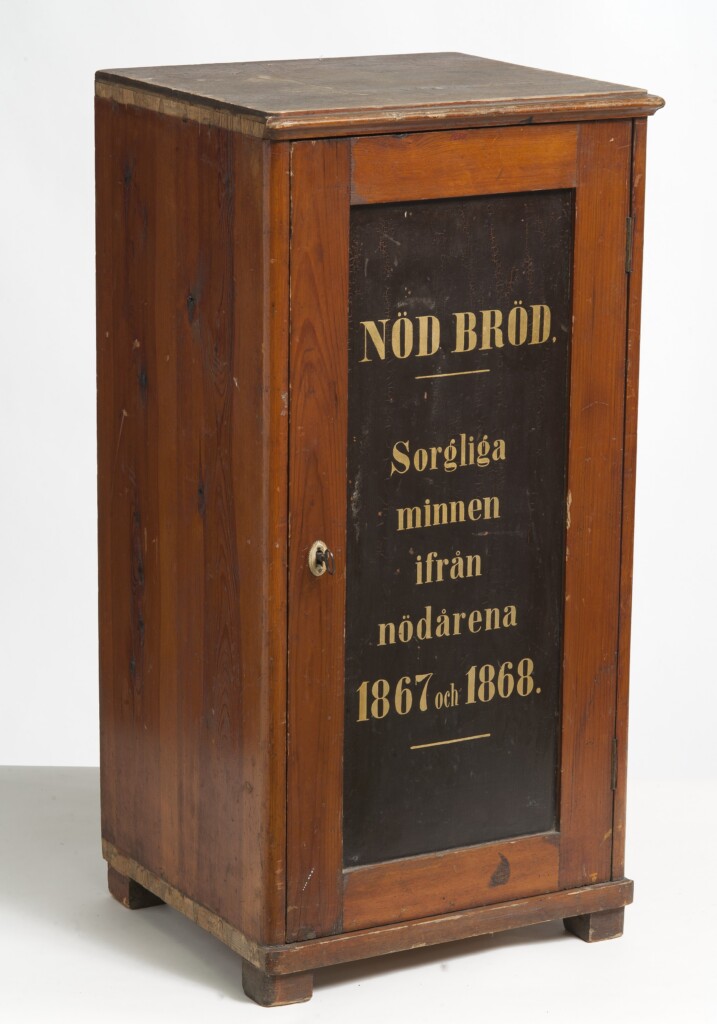
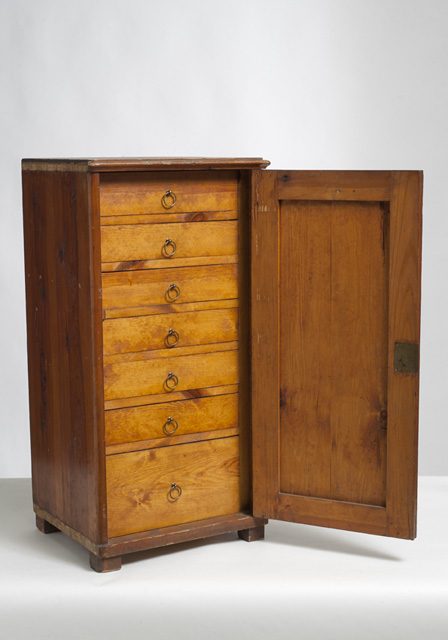
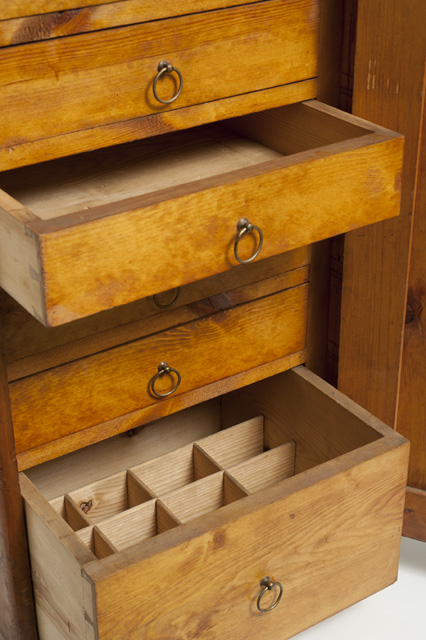
- The following is written on the cupboard door: Nödbröd, sorgliga minnen ifrån nödårena (“Emergency bread, sad memories from the years of hardship”) 1867–1868.
- There are drawers inside the cupboard.
- The bottom drawer of the cupboard is divided into small compartments.
Photos: Museokuva Matti Huuhka & Co/ Matti Huuhka, Finnish Heritage Agency.
In addition to the emergency cupboard, the original donation included samples of emergency bread and flour collected by Julin. Only three loaves from the original collection remain. The other loaves of bread and flour samples have had to be removed from the museum’s collection.
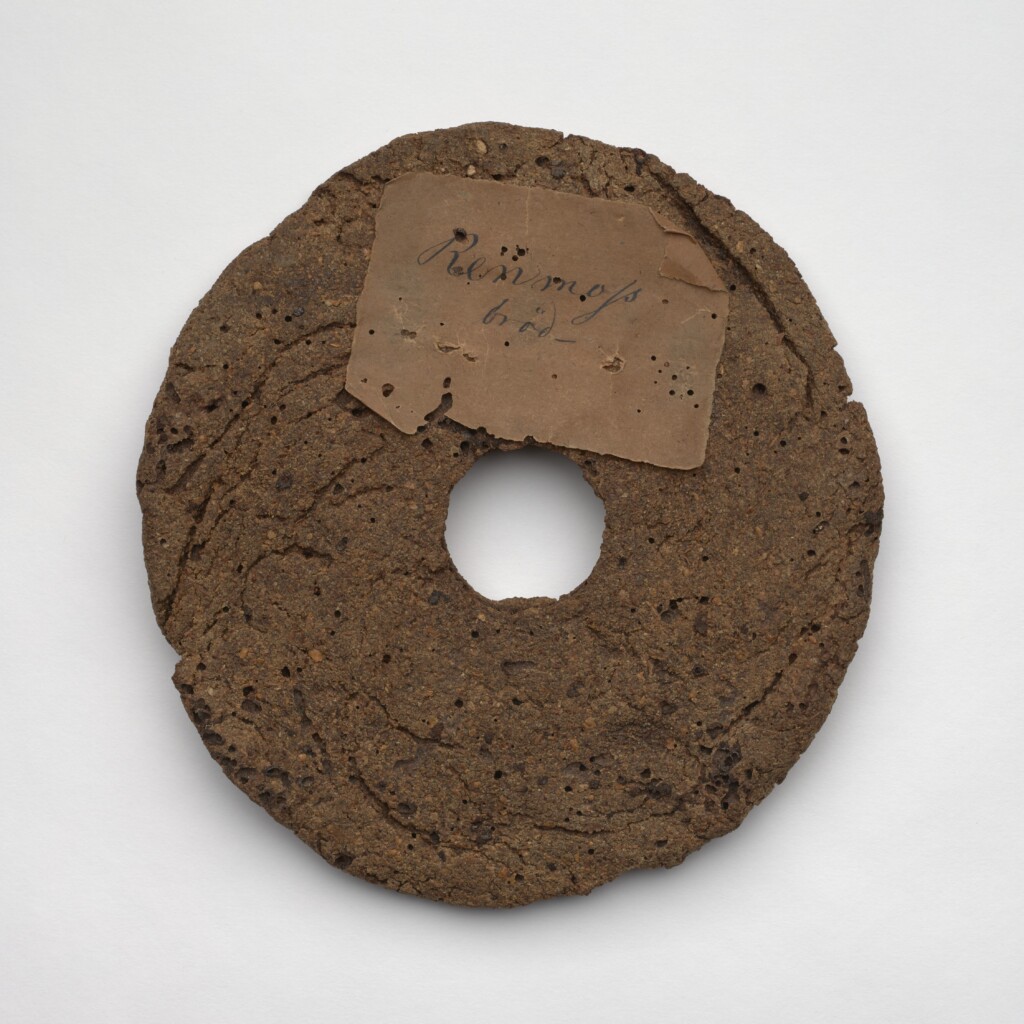
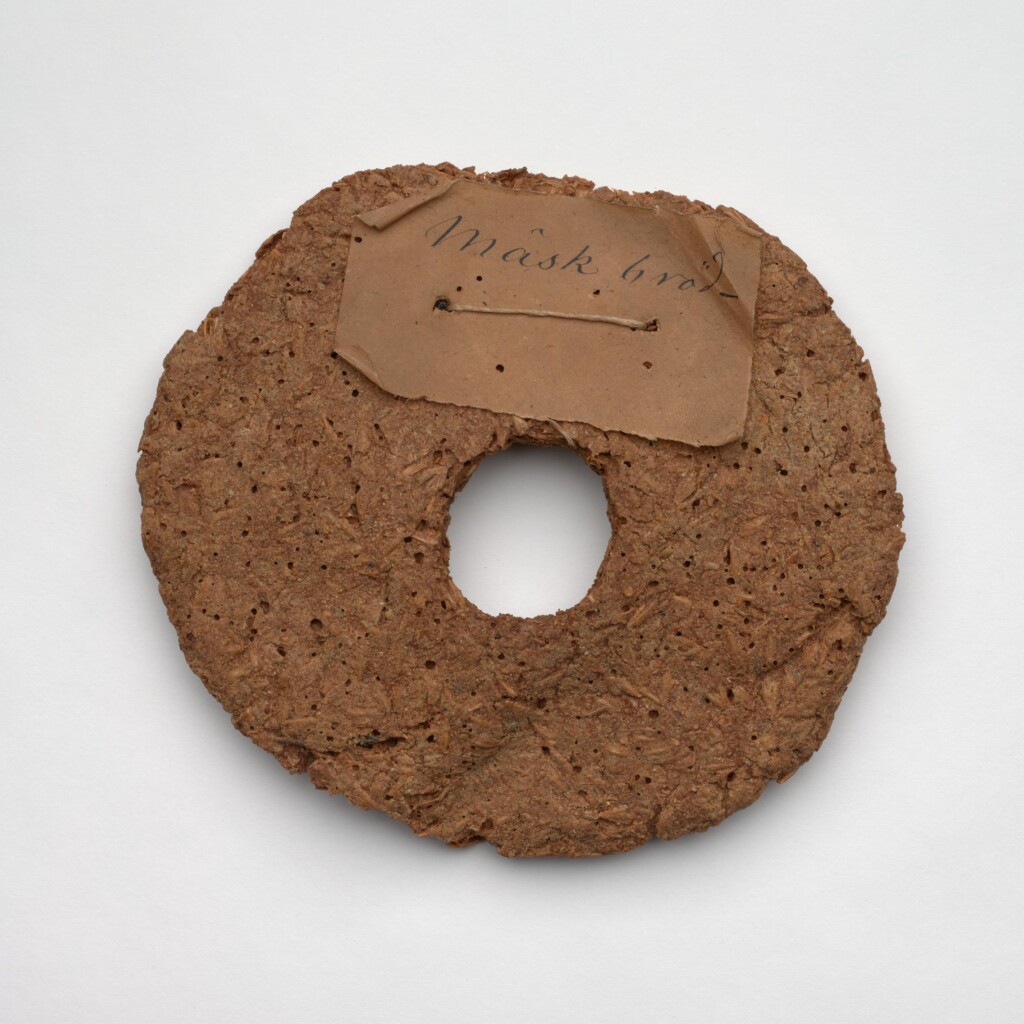
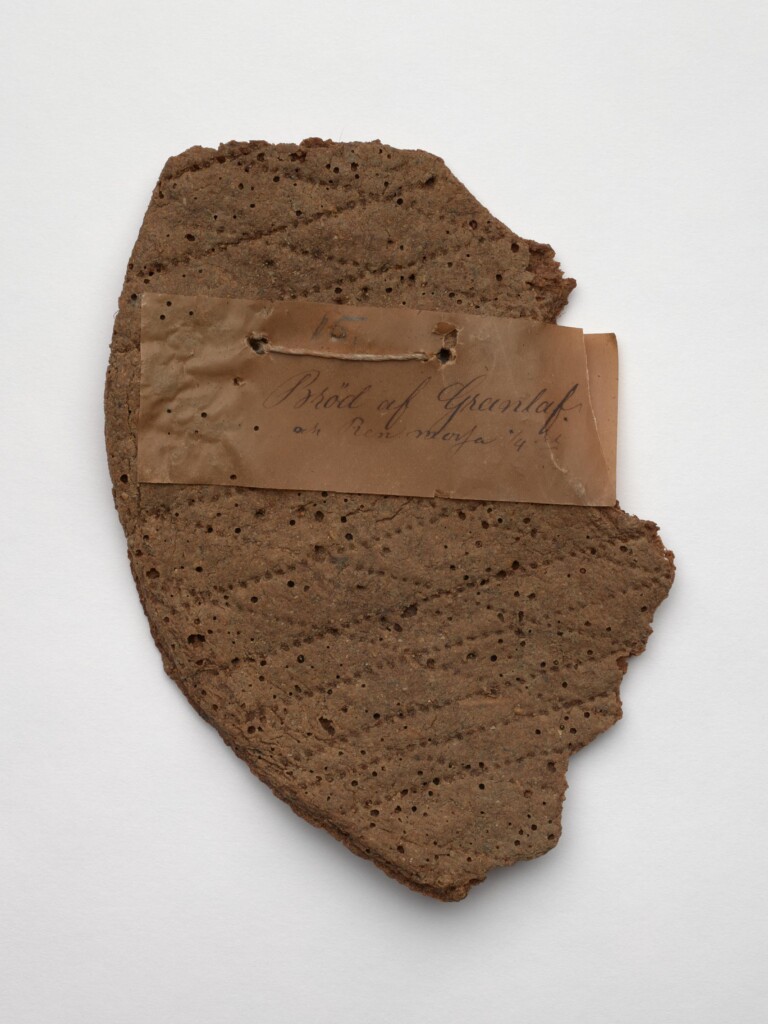
- Emergency bread containing spruce and reindeer lichen.
- Mash bread.
- Emergency bread containing reindeer lichen.
Photos: Matti Kilponen, Finnish Heritage Agency.
In his letter accompanying the donation, Julin noted that the collection would be of use in the future – should the country face further trials.
During the famine of 1867–1868, people’s attitudes towards emergency food varied greatly. In many places, traditional substitutes remained the most reliable way to survive.
In the end, lichen bread did not become widely adopted, and the work of the committees remained, to some extent, removed from the sections of the population it was intended to benefit. However, the experiment reflects the era’s efforts to combine practical means of survival, scientific thinking and preparedness for the future.
The emergency bread cupboard, with its remaining samples, serves as a tangible reminder of a time when the availability of food was not a given and survival required both adaptability and resourcefulness.
Sari Tauriainen
Sources:
Häkkinen Antti. Kun halla nälän tuskan toi: miten suomalaiset kokivat 1860-luvun nälkävuodet. WSOY 1991.
Nälkävuodet 1867–1868. Toimittaneet Jussila Tuomas, Rantanen Lari. Suomalaisen kirjallisuuden seuran toimituksia 1443. Helsinki 2018.
Turpeinen Oiva. Nälkä vai tauti tappoi? Kauhunvuodet 1867–1868. Suomen Historiallinen Seura. Historiallisia tutkimuksia 136. Helsinki 1986.