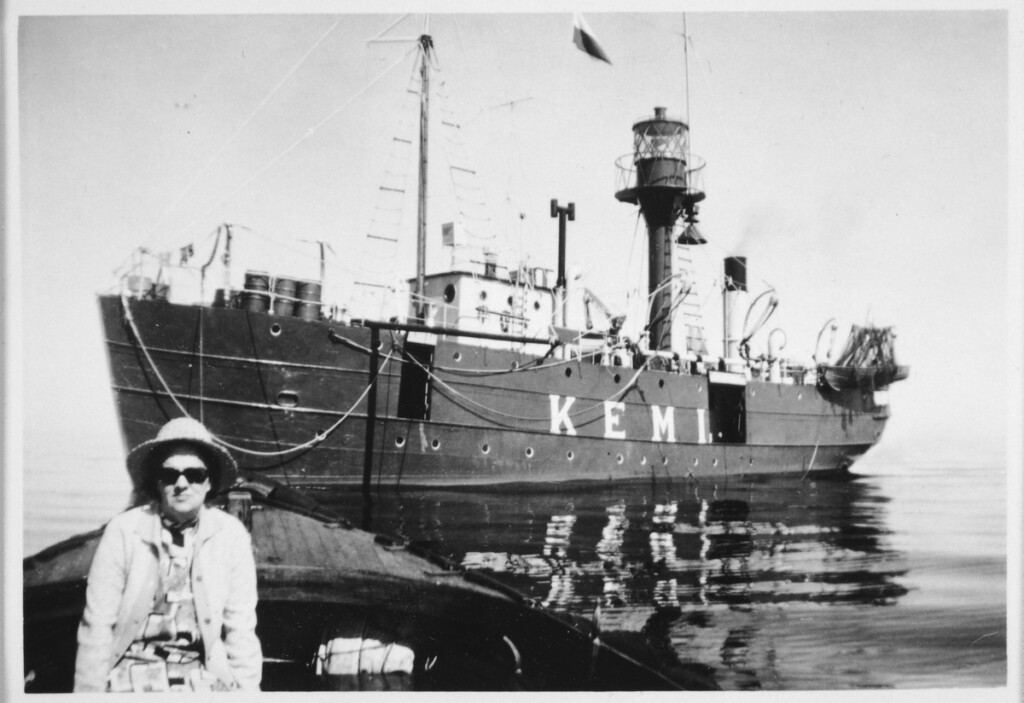
The purpose of lightships has been to show seafarers a safe route to port. They have been stationed at points critical to navigation where it has not been possible to build a lighthouse. Finland has had a total of 15 actual lighthouse ships at 12 stations. The first was built in 1868, and the last in 1925. As the network of fixed lighthouses was expanded, the lightships gradually became obsolete, and the last one, the M/A Kemi, switched off its light in 1974.
A novelty of its time
To improve safety along the approach channel leading to Helsinki via the Äransgrund shoal and Harmaja, the Board of Directors of the Pilotage Authority decided in 1899 to commission a self-propelled, ice-class lighthouse ship. Ordered from the Pori Shipyard and christened Äransgrund after its first station, the vessel was completed in 1901. Its mission was to serve as a backup lighthouse and a pilot station.
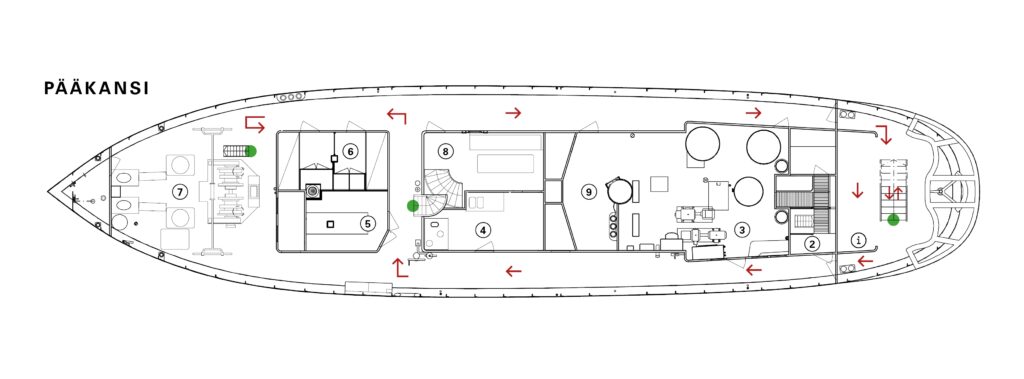
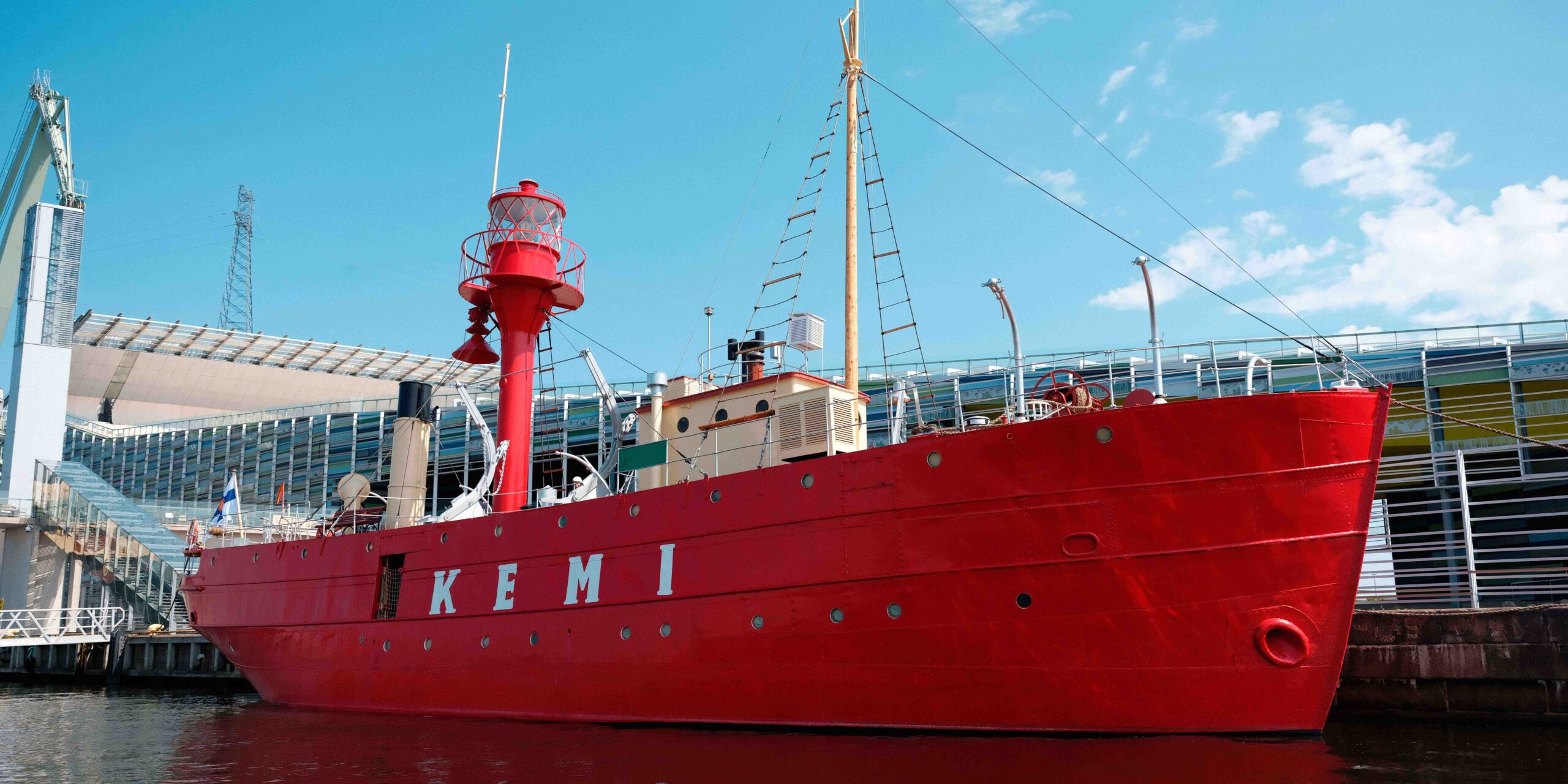
The M/A Äransgrund was a completely new design, the likes of which had never been seen on our waters before. Measuring 30.09 meters in length and 6.9 meters in width, the vessel’s exterior, painted Italian red, extended all the way to the boat deck. Running along the ship’s sides beneath the deck were heat pipes filled with hot steam, designed to improve the ship’s stability in icy conditions. Another unique feature was its own steam-powered propulsion system: a vertical compound engine with an output of 166 i.h.v., combined with a Siemens-Martin steam boiler.
In addition to the steam engine, the M/A Äransgrund was equipped with a square sail that could be hoisted at the bow and two triangular, boomless topsails. The original lighting equipment was ordered from the Barbie and Bernard factory in Paris.
The M/A Kemi represents a type of lighthouse vessel developed at the turn of the century and reinforced for navigation in ice. It was the first of its kind and, moreover, was manufactured in Finland. The ship’s value is further enhanced by the fact that its steam engine and anchoring equipment have survived to this day in nearly original condition.
The vessels were named after their places of deployment
The names of lightships changed according to their location. When the M/A Äransgrund was transferred to the coast off Rauma in 1921, the vessel was renamed the M/A Relandersgrund. In 1955, it was decided to transfer the vessel—which had changed its name several times—from the coast off Rauma to its new station in Kemi. Before that, however, the ship underwent a complete overhaul at the Wärtsilä shipyard in Vaasa. As part of the overhaul, its new name, Kemi, was painted on the ship’s side in large block letters.
From 1960 onward, the Kemi was Finland’s only active lightship. During its long history, the ship also served at times as a hydrographic survey vessel. The M/A Kemi left its station for the last time in 1974, setting course for Helsinki.
Ship’s names:
- (Nya) Äransgrund 1901–1921, fall of 1902 Nahkiainen
- Relandersgrund 1921–1926
- Relanderinmatala 1927–1932
- Rauma 1933–1955
- Kemi 1956–
A memory of the era of lightships
In the fall of 1986, the Maritime Administration and the Finnish Heritage Agency decided to restore the ship as a museum vessel, recreating the appearance it had during its final years of service. After the major restoration, the Finnish Maritime Administration transferred the lighthouse ship Kemi to the Finnish Heritage Agency, and the ship was moved to Helsinki, to the Maritime Museum of Finland’s pier on Hylkysaari. The ship opened to the public in 1989.
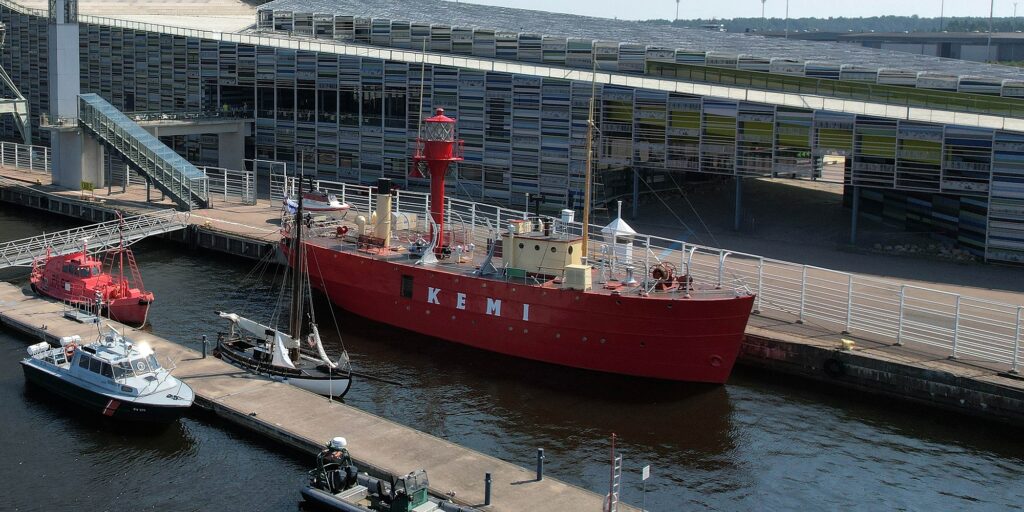
When the Maritime Museum of Finland moved from Hylkysaari to Kotka in 2007, the M/A Kemi was moved to the pier at the Maritime Centre Vellamo. Due to the poor condition of its interior, the ship was closed to the public and reopened to the public in the summer of 2022 at the Maritime Center Vellamo’s museum ship pier after a major restoration project.