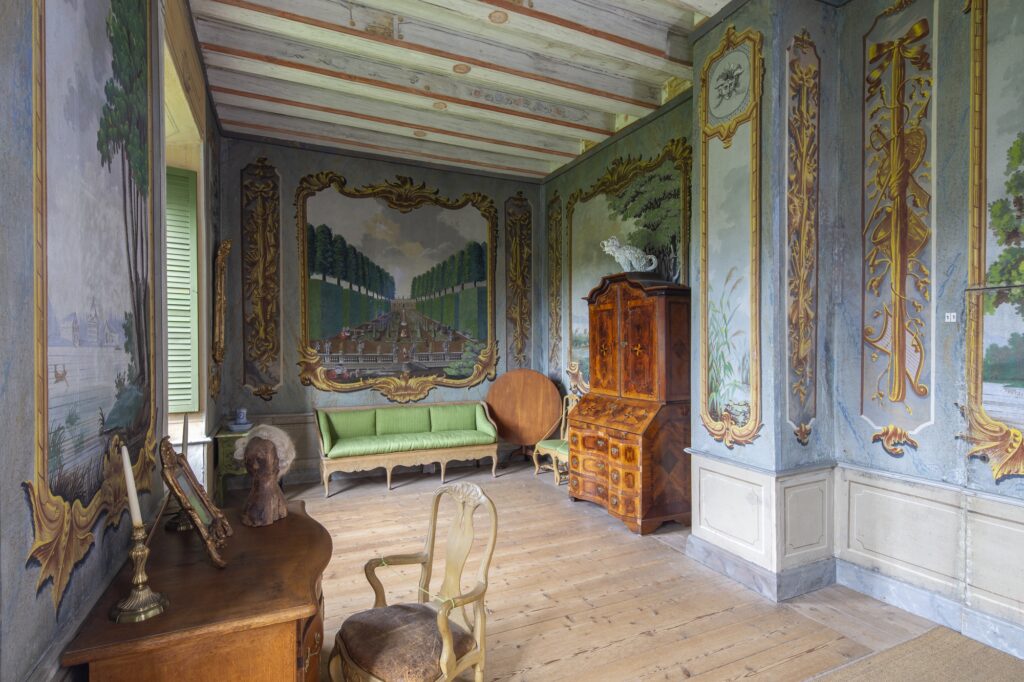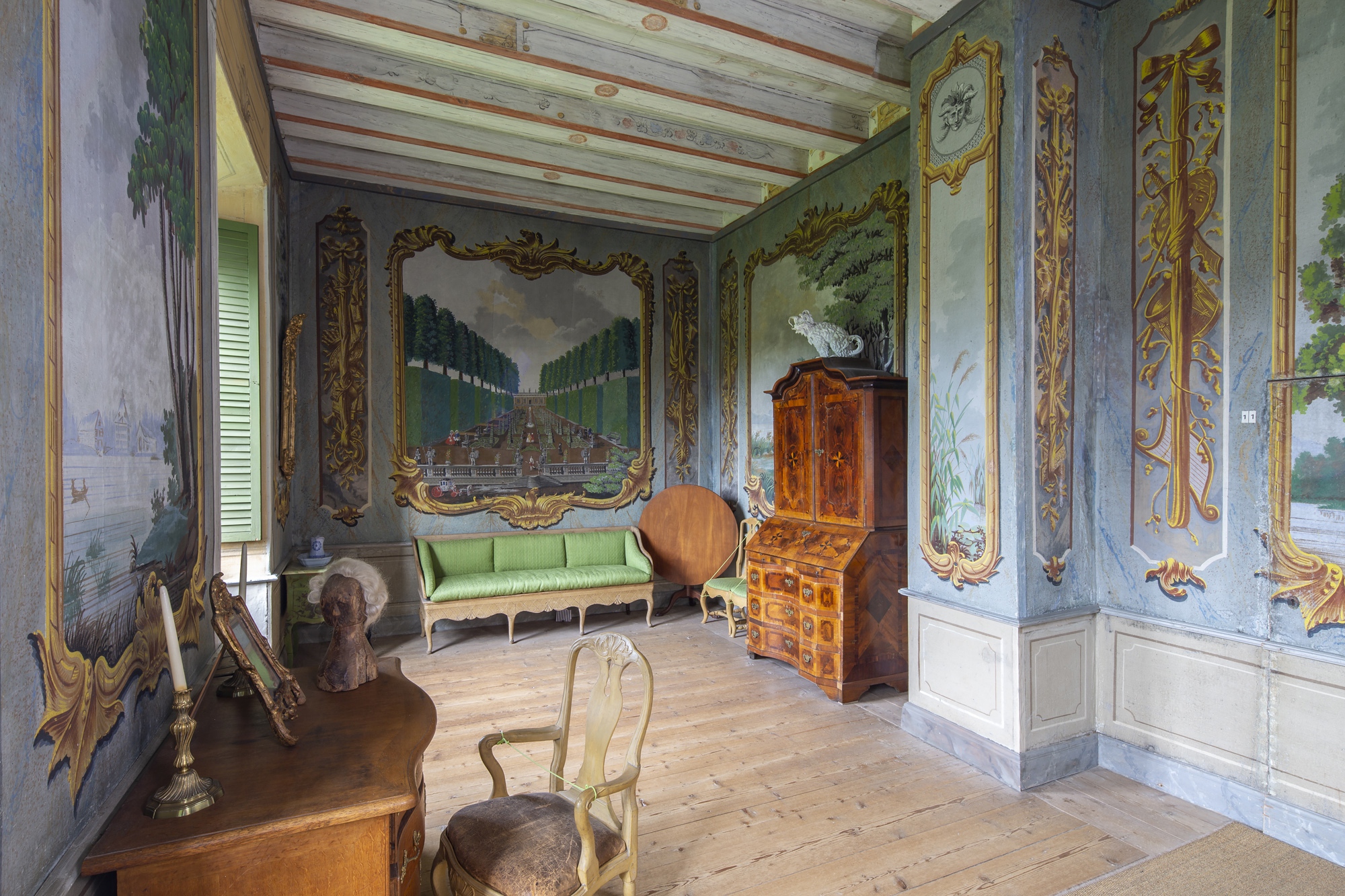
There is no certainty regarding the room’s original purpose, and its original layout is also uncertain. Based on Carl Erik Mannerheim’s estate inventory, it is assumed that the room was divided into two rooms at that time (1837): a red guest room and a blue master’s room. In the 17th century, the room also served as a second entrance to the banquet hall. On the second floor, there is a similar layout in the same location.
The painted Rococo tapestries covering the walls of the Devil’s Chamber date from the 18th century. Older paintings have been overpainted. The best-preserved painting is the hunting scene above the door leading to the large master’s chamber (12), depicting a dog, weapons, and game birds. The Baroque park scene on the back wall, framed by a magnificent Rococo frame, is based on an otherwise unidentified print from the 1740s. The same landscape, complete with its frame, was used on the lid of the Turku shoemakers’ guild chest, which was painted in 1748. There are clear stylistic differences in the room’s wallpaper, suggesting that the paintings date from different periods. The landscape depicting Louhisaari in the space between the windows is similar to all known views of Louhisaari from the early 19th century up to Johan Knutson’s lithograph in the work “Finland framstaldt i teckningar.”
The room’s furnishings are in the Rococo style. The furniture is typical of the period, but the pieces are somewhat simpler in design than their Stockholm counterparts. The green washstand, originating from the Haapasaari estate in Rauma and imitating a Jakkamaalaus painting, displays Chinese influences popular in the Rococo style during the 18th century. The washbasin and washbowl on top of the cabinet were manufactured by the Rörstrand factory in the 1740s. The wooden wig stand was found in the attic of Louhisaari; the so-called flower-adorned wig on top of it is new. The large gilded mirror is from Louhisaari, as are the cabinet clock and chairs. The handsome writing cabinet, decorated with fine wood inlay, is from the Palttila estate in Laitila.
The tiled stove was assembled in the late 19th century from loose tiles found in the castle’s attic. The stove’s appearance reveals that it was assembled entirely at random, albeit from authentic mid-18th-century Rococo tiles. The tiles feature, among other things, Chinese-influenced lion heads and an image of a fashionably dressed couple, likely based on a French model.