Whose history
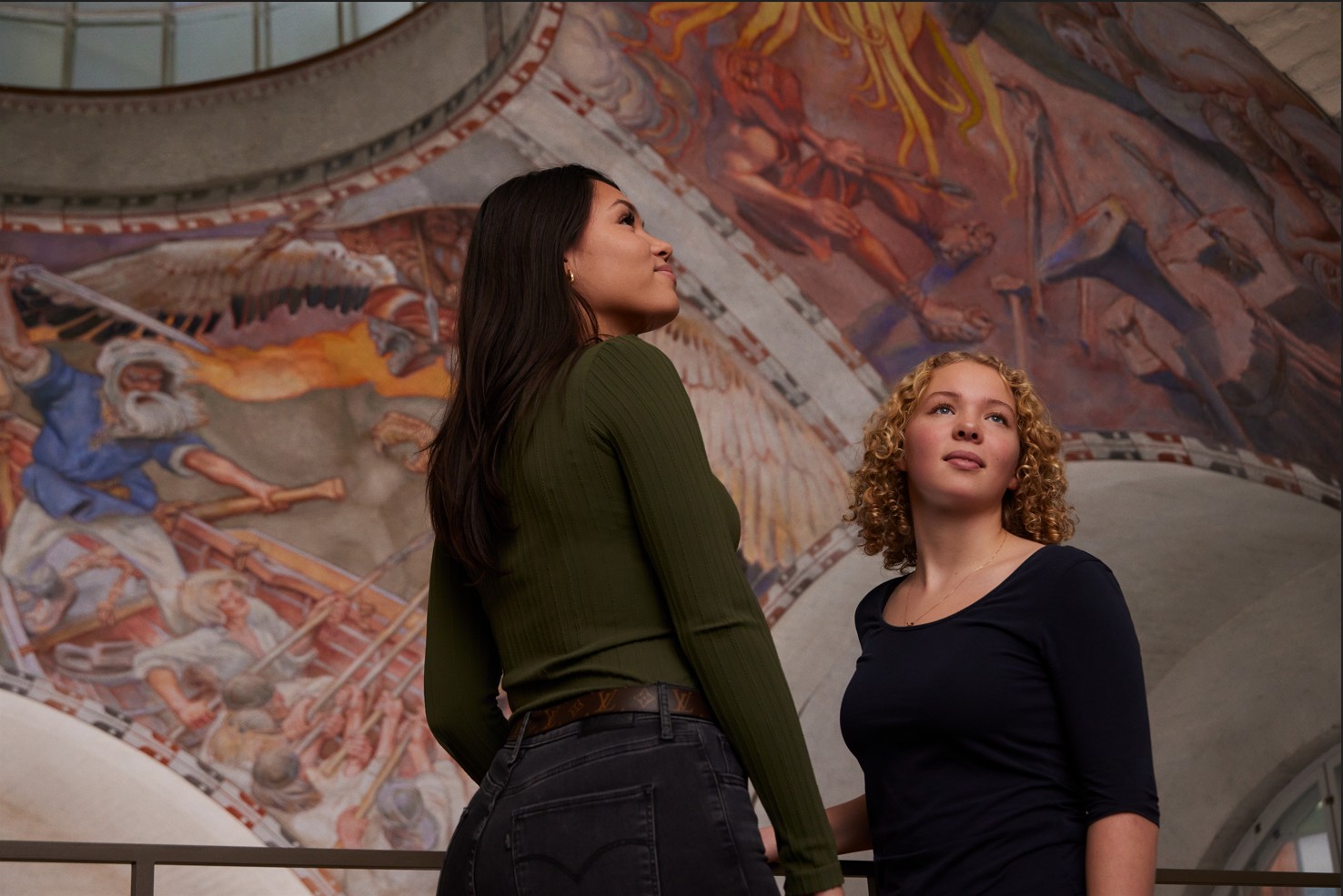
journalists from RARE visited the National Museum's exhibition. In a series of four videos, they considered what Finnishness is and who belongs to it. RARE is a journalistic media for and by young people. The tasks on this page are designed for 12-16 year olds. The videos are unfortunately in finnish only, but the tasks can be done separately.
Warm-up task
Write five people that you think belong to Finnish history.
- Who are the people on your list?
- Are there ordinary people?
- Are there women?
- Are there children?
- Are there minorities?
- Why have these people stuck in your mind?
Task: Power and responsibility
The video discusses the role of power and responsibility in both the writing and consumption of history, inspired by the Another Country exhibition. History is written by researchers, teachers, the media, museums and textbooks.
Think about the questions yourself or discuss with a partner:
- Who do you think should decide what history is told?
- Can history be completely unpolitical?
- Why are some stories remembered better than others?
- Imagine that you are planning a new history exhibition.
- Which three topics would you include?
- Which three topics would you leave out?
- Why?
Task: What is Finnishness?
The video discusses how Finnish history was written in the 19th century during the time of nationalism, and who today defines the history of Finnishness.
Discuss or write:
- What does Finnishness mean?
- Can there be multiple Finnishnesses?
- Who have been able to appear in Finnish history?
- Who have received less attention?
Task: Great men or not?
The story told by the National Museum’s Otherland-exhibition inspires us to look at history with different eyes. Many historical accounts feature rulers, warlords and other well-known figures.
- Why are their stories told in particular?
- Why are the lives of ordinary people less often known?
- Can an ordinary person be historically significant?
Assignment: Relatable history
The video discusses what kind of relatable stories about the past are told in history lessons and museums – and what kind are not.
Reflect by yourself or discuss with your partner:
- Have you ever found a person in history that you could relate to?
- What kind of person was that person?
- Why is relatability important?
Museums and textbooks influence who we consider to be part of our common history. Why is it important that history shows a variety of people? Can history change? It is often thought that history is a set of past events that cannot be changed.
Discuss together:
- Can the interpretation of history change?
- Why do some people or events take on new meanings at different times?
- How do contemporary values influence what we want to study about the past?
Write a short, reasoned text with the title “History is not only a story about the past, but also a story about the present.” Do you agree or disagree?