The artist Albert Edelfelt died on 18 August 1905. He was buried in Hietaniemi Cemetery in Helsinki on 24 August. The day was cloudy and slightly rainy, with a temperature of 13.5 degrees. In the words of Helsingin Sanomat: “A misty, rainy atmosphere prevailed in the air as large crowds gradually began to gather at the harbour. – – – Flags expressed mourning on ships, on the roofs of public buildings and some private homes, as they flew at half-mast.”
The steamer Borgå carried the coffin from Haikko to Helsinki. Edelfelt’s coffin was on the deck of the ship, under a canopy, surrounded by flowers. As members of the Uusimaa student nation carried the coffin from the harbour through streets filled with crowds on the way to the church, “The sky cleared for a moment, but then was once again covered by a grey veil, from which a steady rain began to fall.”
The artist’s funeral was held in St Nicholas’s Church (now Helsinki Cathedral) in Helsinki. The honour guard of the Uusimaa student nation positioned itself around the catafalque. Closest to the choir sat Edelfelt’s next of kin, the board of the Antell delegation and members of the Finnish Art Society. The entire church was filled to the brim with people.
Among the more than a hundred memorial wreaths laid on the coffin was one from the state of France and the French consul in Helsinki, Fernand Pradère-Niquet, which was placed by his son, René Pradère-Niquet. He also laid a second, silver wreath on Edelfelt’s coffin, decorated with tricolour ribbons. The sender of the wreath was Jean-Baptiste Pasteur (1851–1908), the son of the microbiologist and chemist Louis Pasteur (1822–1895).
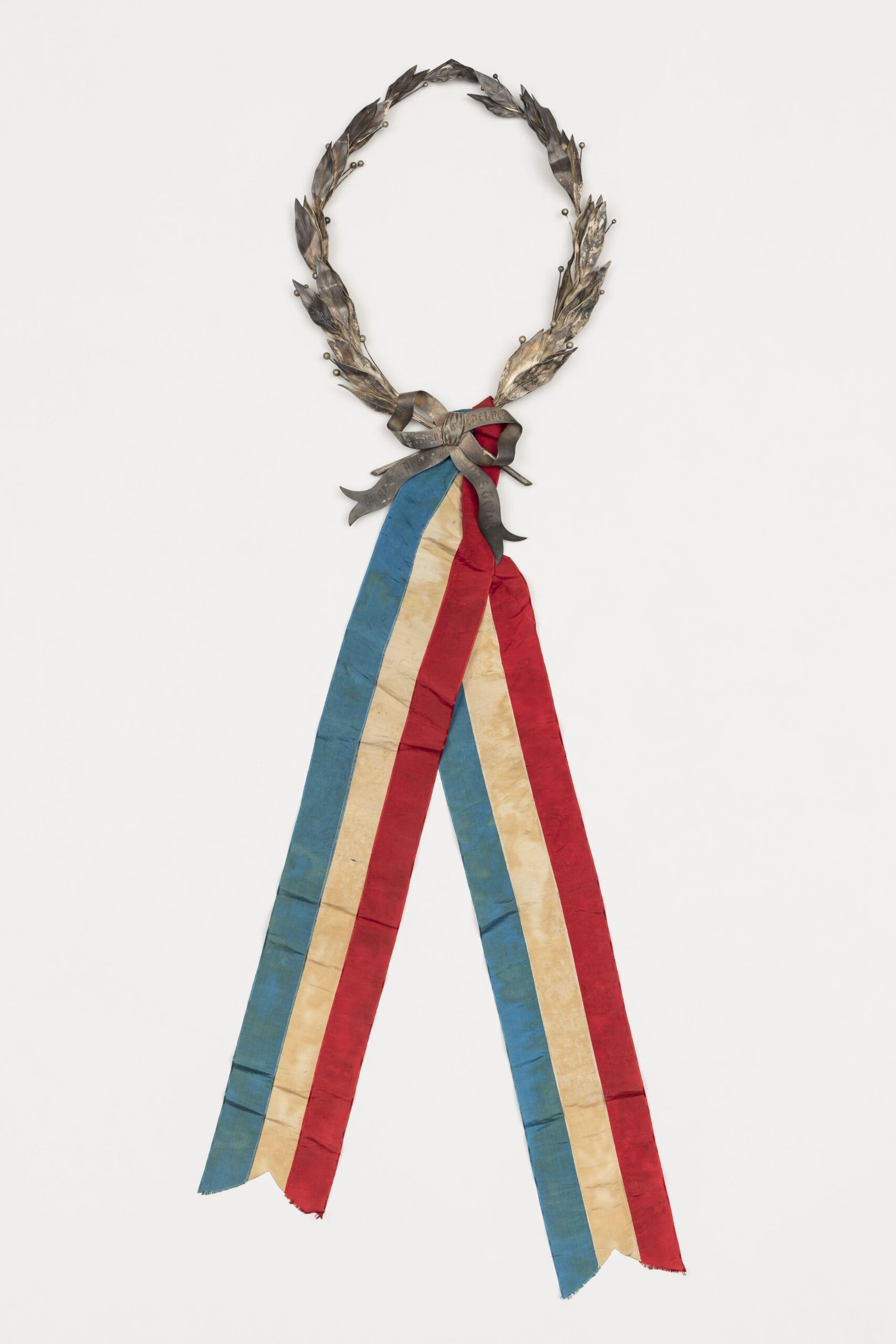
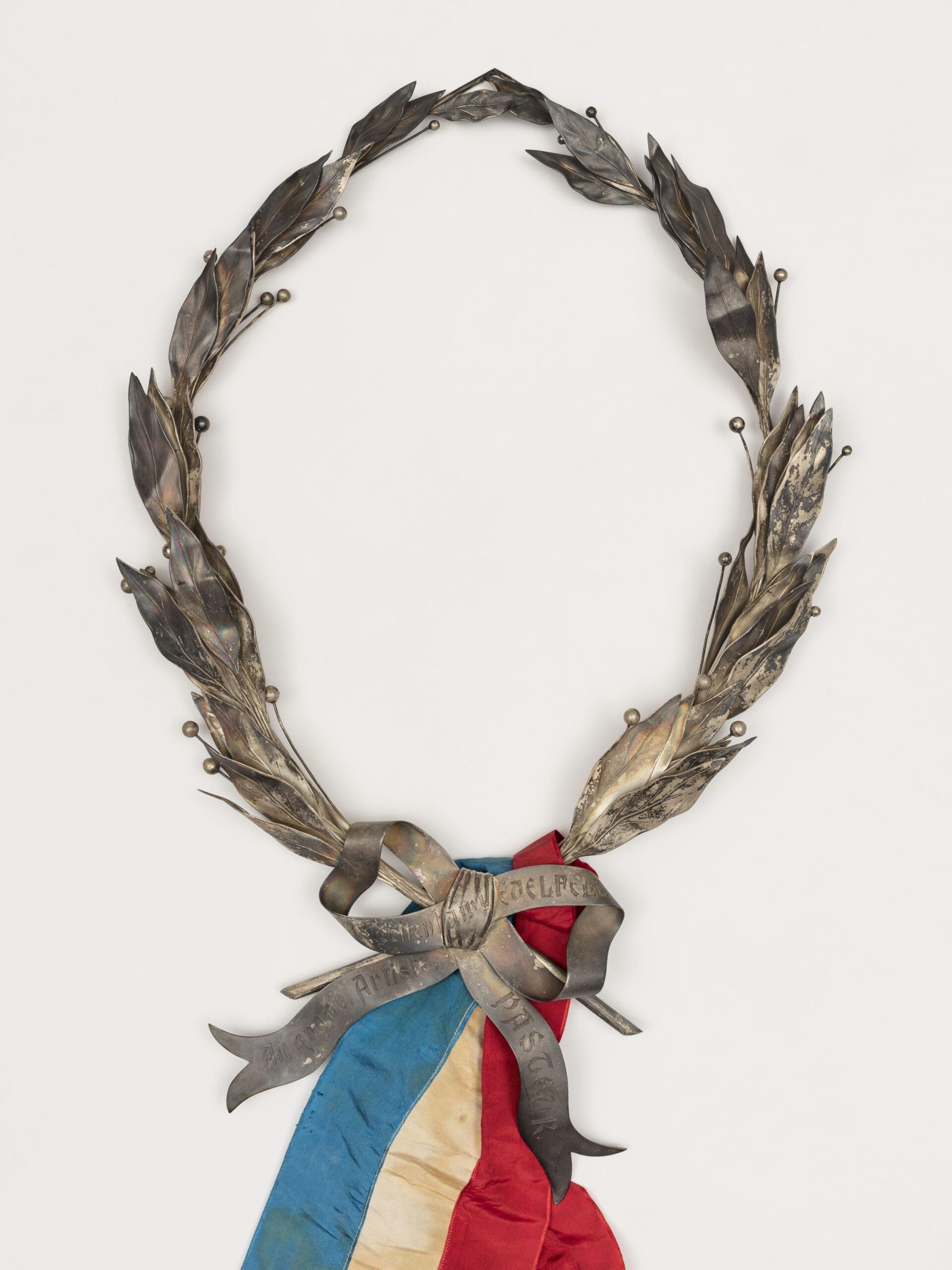
Like the other wreath-layers, René Pradère-Niquet gave a short speech, quoted in the newspaper Hufvudstadsbladet, stating: “Before I leave here, I must still fulfil one duty. The son of the great Pasteur has entrusted me to lay this wreath in his name and in memory of his famous father on Edelfelt’s grave. Let it be a reminder of the friendship that the great scientist felt towards [Edelfelt], a friendship that was deep and full of admiration, which honoured them both and which only death could sever.” The wreath bears the inscription: Au grand Artiste, à l’excellent ami Edelfelt. Pasteur.
The portrait of Louis Pasteur (1822–1895), perhaps Albert Edelfelt’s most famous foreign model, was painted in 1885. Earlier, in 1881, Edelfelt had already painted a portrait of Pasteur’s son, Jean-Baptiste Pasteur, who sent the wreath and, like his father, was a microbiologist and chemist.
Although Edelfelt had described Louis Pasteur as a difficult model and the lighting in his study as poor, Pasteur had been satisfied with the portrait, particularly with the precision of its details. Louis Pasteur’s portrait was exhibited at the Paris Salon in 1886 – at the same time as a very differently styled portrait of Pasteur painted by Léon Bonnat – and at the Paris World’s Fair in 1889, the work was awarded a gold medal. Later, Edelfelt also received the rank of Officer of the French Legion of Honour, and eventually the French state purchased the work.
The wreaths laid on Edelfelt’s coffin at St Nicholas’s Church were either carried or brought by carts to the grave, where they were assembled into a high mound. As a reminder of the rainy weather that day, the ribbons on Pasteur’s wreath show a white streak darkened by moisture and dried water stains.
The wreath entered the collections of the National Museum of Finland in 1927, along with Albert Edelfelt’s gold medals, awarded e.g. at the Paris Salon and acquired by the Antell delegation.
Jouni Kuurne
Photos: Ilari Järvinen, Finnish Heritage Agency