The cemetery of Luistari, Eura, was found in 1969 in connection with sewerage work. Archaeological excavations were carried out on the site in 1969–1992. The cemetery had been used for almost 800 years, during which time more than 1,300 people were buried there. Of these, about 400 graves have been examined further. The oldest graves date back to the Vendel Period, circa 600–800 CE.
In the Iron Age, weapons, jewellery and other objects were sometimes buried with the deceased. It was believed that these would be needed in the afterlife. Plentiful burial offerings reflected the position of the deceased and their family in the community. Especially during the Viking Age (circa 800–1050 CE), a lot of jewellery and utility items were placed in graves. Many graves with fewer or no objects were also found in the Luistari cemetery. Some of these graves without objects date from a later period, when Christianity was already influencing the burial traditions.
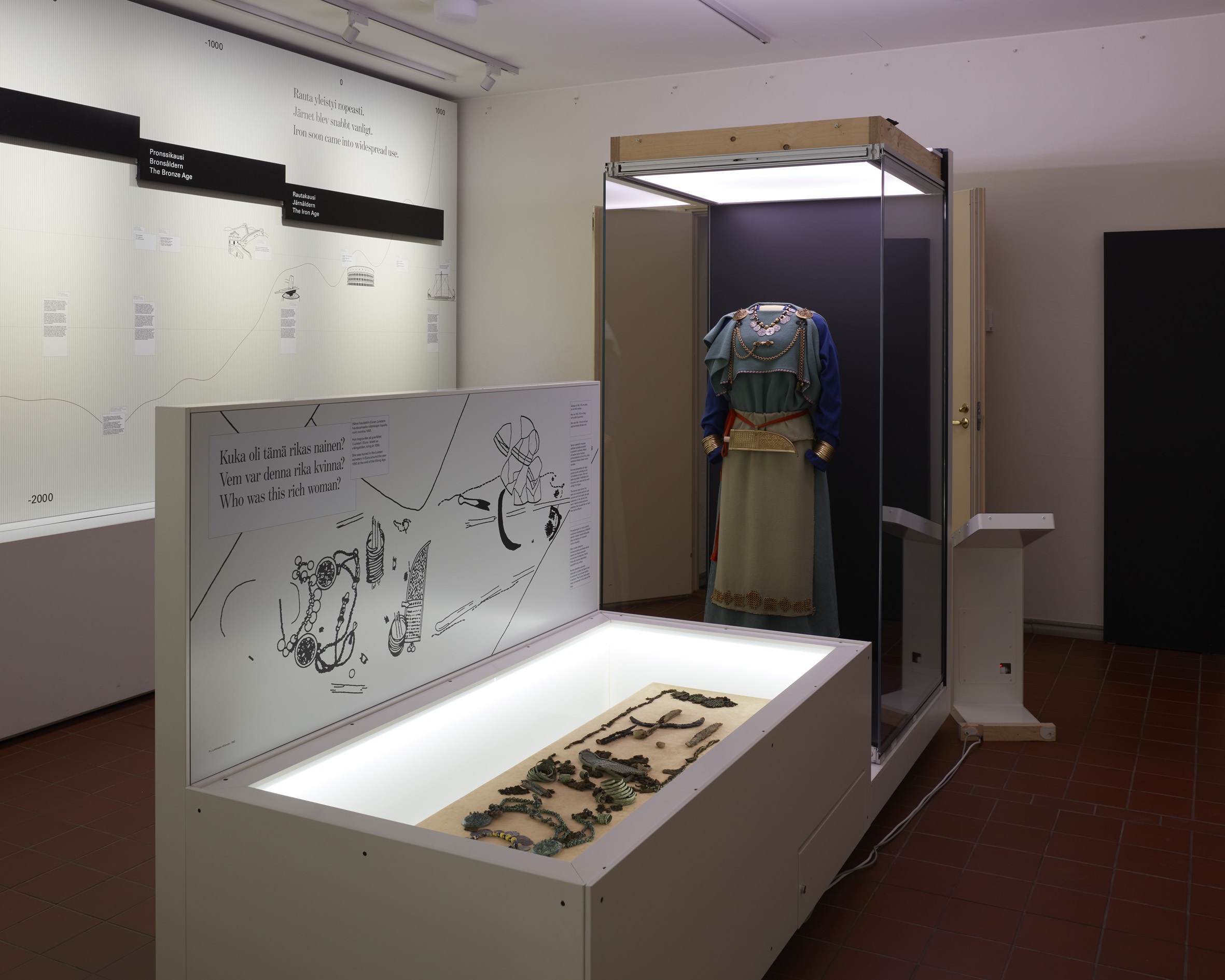
The woman buried in grave number 56 in Luistari was named the “Eura Queen” by the director of the excavation, Pirkko-Liisa Lehtosalo-Hilander. The grave was found during the first summer of digging in 1969. The grave was at a depth of approx. 80 cm in a field, in an area dense with graves. It was quite large, approx. 250 x 110–120 cm. Pieces of a wooden platform had been preserved under the objects, which were covered by a layer of wood and birch bark. Several subsequent burials had been made on top of the grave.
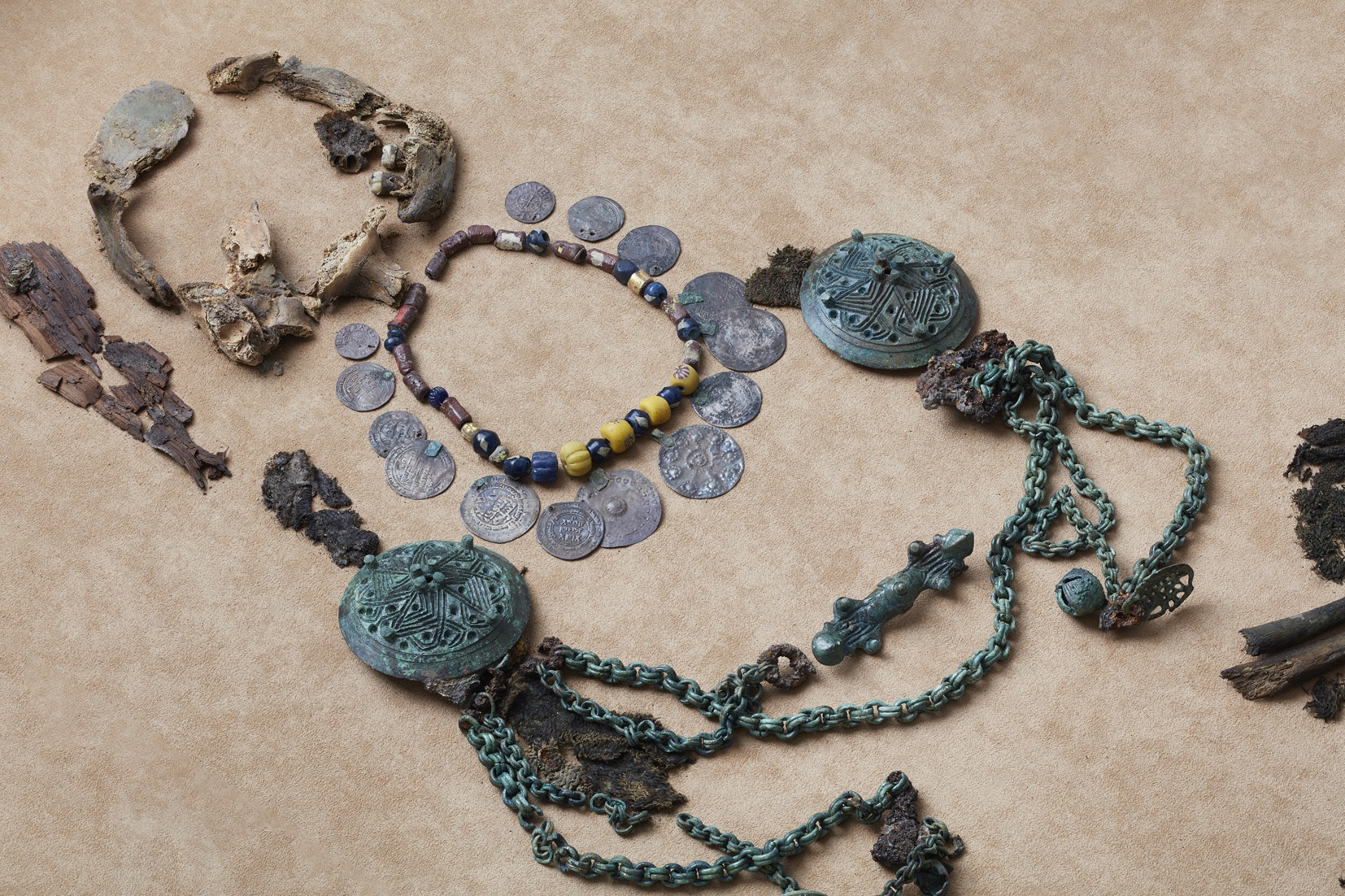
In addition to the objects, some of the deceased’s jawbone and teeth had been preserved, along with some bones of the upper arm, forearm and fingers as well as a hip and the remains of her shin bones. Based on these, it was estimated that the woman had been about 165–170 cm tall and had been buried on her back with her arms bent over her waist. According to dental analysis, she had died around the age of 45. The tooth enamel shows developmental abnormalities suggesting a possible deficiency disease in childhood. According to an osteologist, the woman’s hip joint shows signs of osteoarthritis.
Over the decades, a lot of research has been conducted on the Luistari cemetery. The results and literature references are available on Luistari’s own website. The excavation reports are available on the Finnish Heritage Agency’s website.
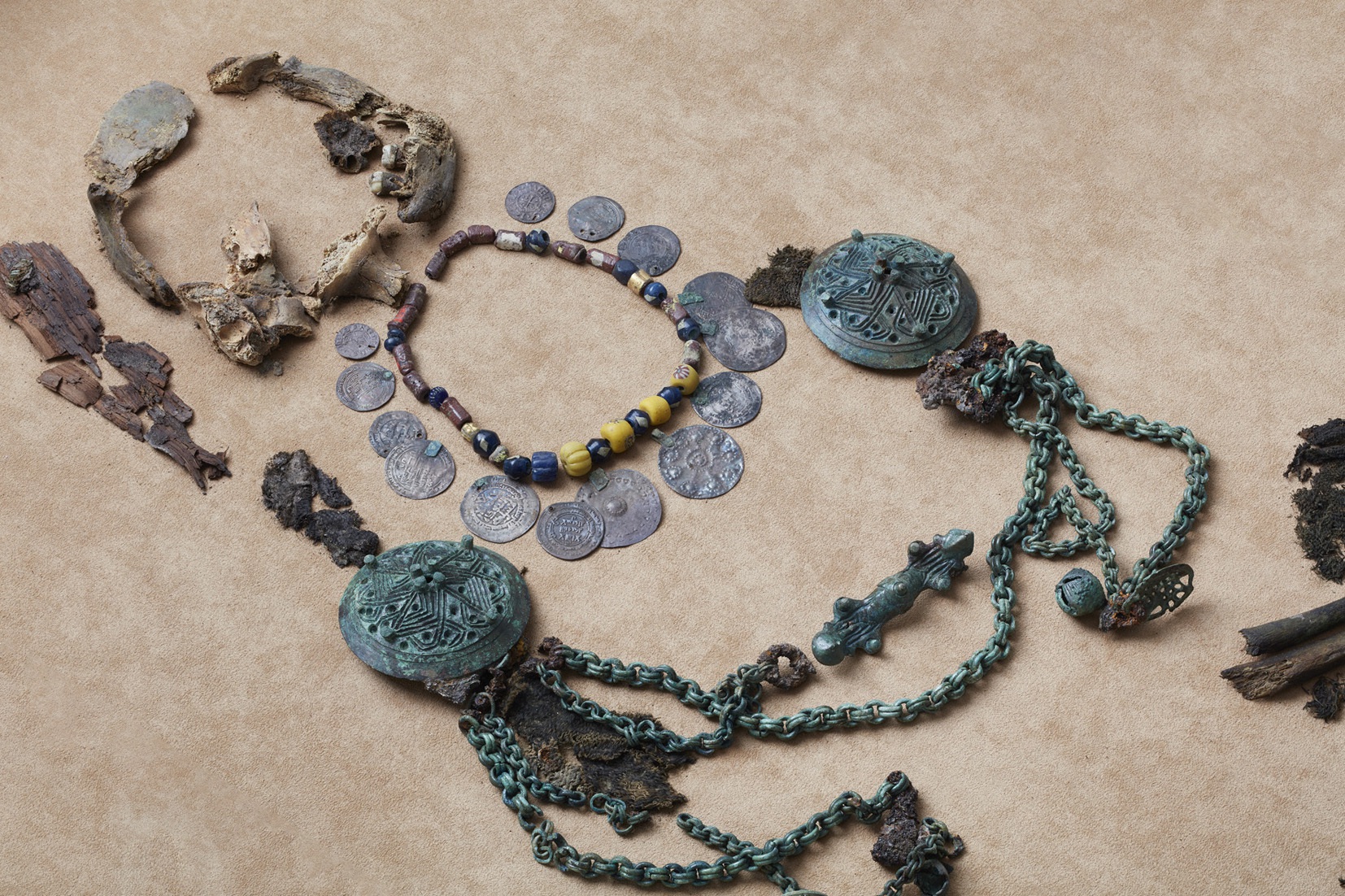
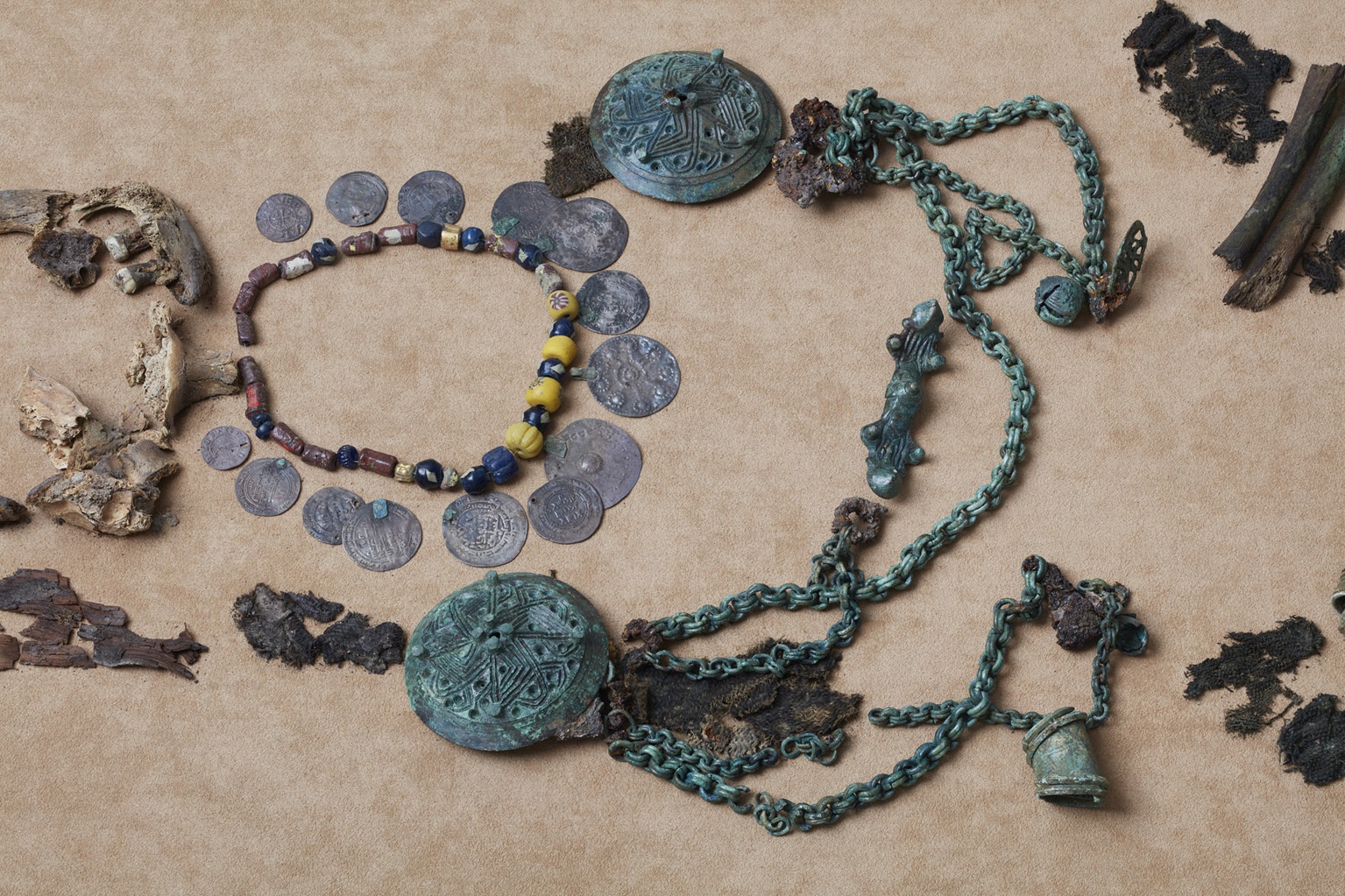
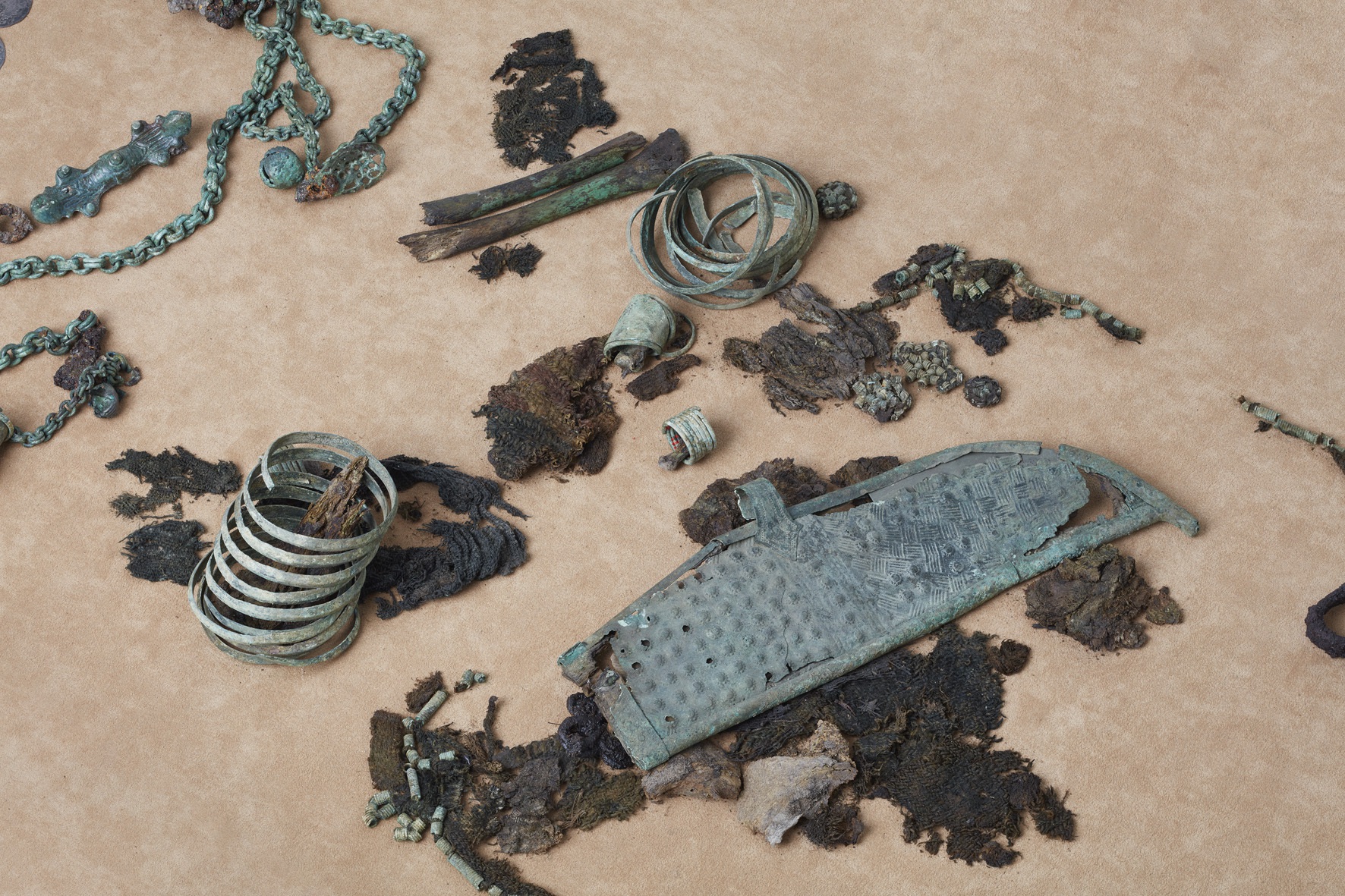
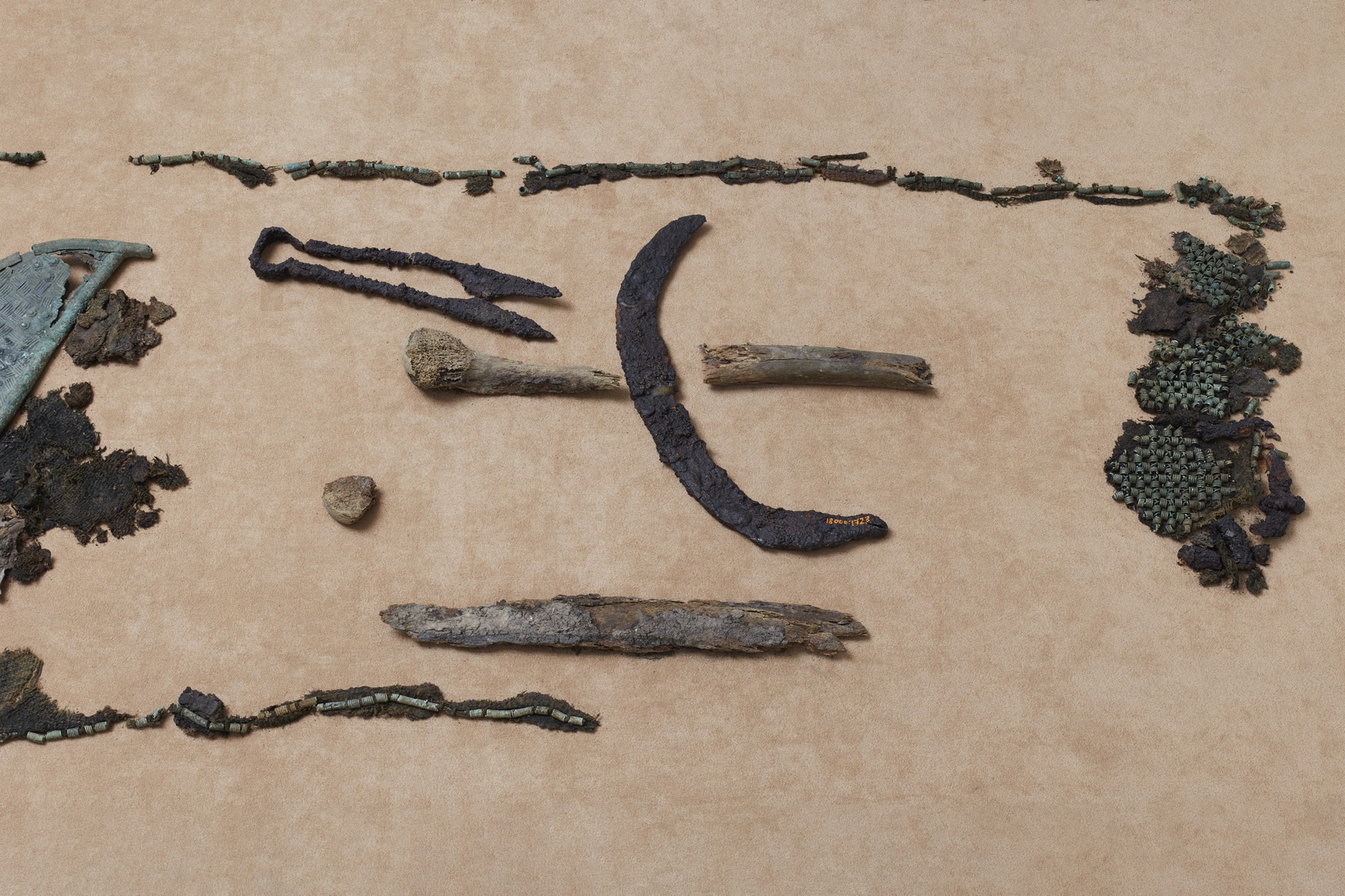
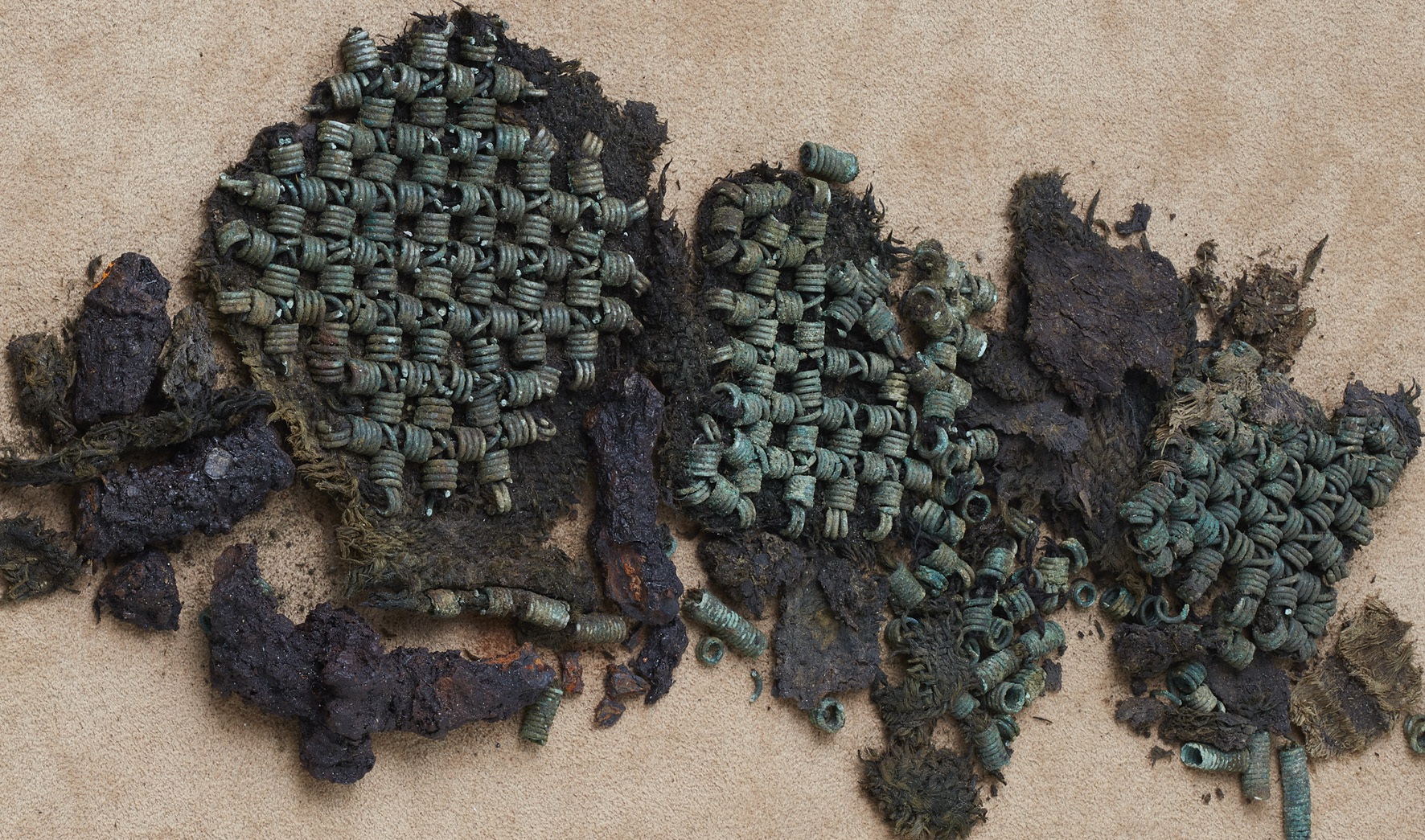
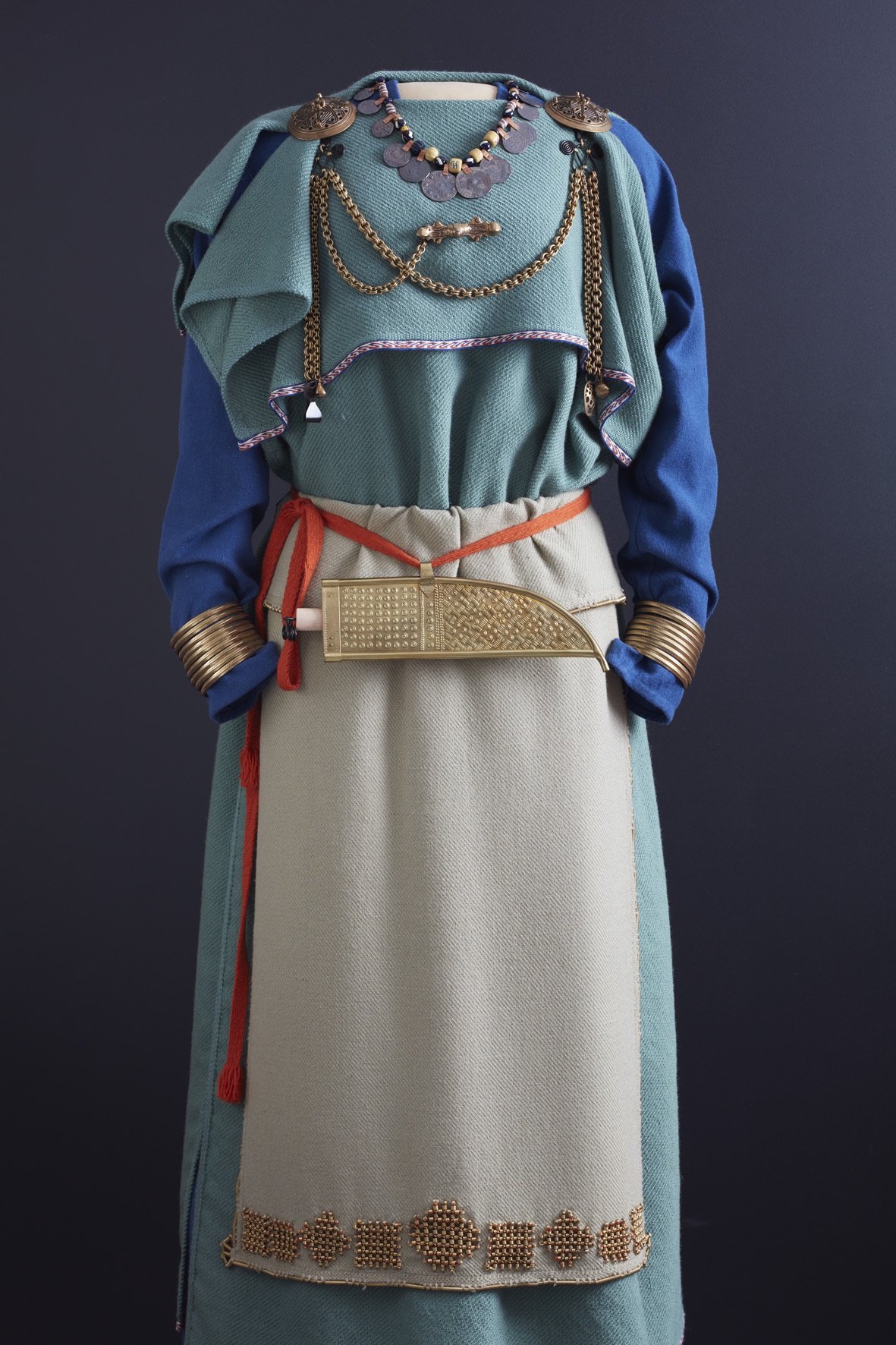
The woman had a necklace with 34 glass beads, 11 coins and two silver pendants. Ten of the coins are Oriental dirhams, the newest one from 1003/1004 and the rest from the 10th century. In addition, there was a coin minted in Augsburg, Germany, at the beginning of the 11th century. The newest coin in the grave, a penny struck during the reign of Cnut the Great in Hertford, England, dates back to 1018–1024. It was found a bit further away and it is not certain whether it was part of the necklace. This coin had also been perforated and used as a pendant. Based on this last coin, it is known that the woman was buried sometime after 1018. Radiocarbon dating also dates the grave to the early 11th century. The woman’s jewellery is from the Viking Age and has many characteristics typical of Southern Finland. Round buckles were used in pairs on the shoulders for fastening the dress. There was a chain hanging from the buckles, on which various pendants could be attached; in this case, bells were attached. The woman had an equal-armed brooch on her chest. An equal-armed brooch was often used to fasten cloak-like clothes. The woman’s arms were decorated with twisted bronze bracelets, and she had two rings on each hand.She had a small iron knife hanging from her belt. In the National Museum’s Prehistory exhibition, the decorative bronze-plated knife sheath has been replaced with a similar sheath found in the nearby Osmanmäki cemetery (KM2700:58). The sheath found in the Eura woman’s grave was very fragile and fell to pieces. Some cat’s fur had been preserved inside the sheath, and remains of deerskin and fabric were found under the sheath. There was a piece of cloth trimmed with tablet woven braid under the apron’s hem, and there were also traces of tablet woven braids at the waist. The hair of several animals has been identified from the grave, including deer, bear, otter, weasel and cat.The woman had shears next to her femur, a sickle at her feet, and a broken clay vessel, which had probably contained food or drink. The clay vessel may have been one of the burial offerings, but it may also have been linked with burial rituals. In addition, a broken iron object was found in the grave, possibly a horse bit.Due to the acidity of the Finnish soil, clothing and other organic materials, such as bones, are poorly preserved. Plant fibres are usually completely decomposed, and wool or leather are mainly preserved in connection with bronze objects, since the substances produced by the oxidation of bronze slow down decomposition. In Eura grave number 56, textiles and bones have been preserved relatively well thanks to the abundant bronze objects. Inside the bracelets, for example, there were bones of the forearm and remains of sleeves. The apron had square bronze spiral decoration made of copper alloy.An Iron Age dress was reconstructed based on the remains from the grave, and over a hundred of such dresses have been made. The design and colours of the dress were deduced from the fabric remains and the location of the decorations and jewellery. The reconstruction included the parts about which sufficient information was available when the work was carried out in the 1970s. The woman’s clothes were made of wool dyed with plants. The colouring plants were identified as heather, birch and bedstraw as well as an indigo plant, apparently woad. The lower dress was dyed blue, and the outer dress and apron are green. The belt is a red, patterned, tablet woven braid that secures the outer dress and apron. In addition to these parts, traces were also found of a headdress, a cloak, the nålebinding technique and fur.