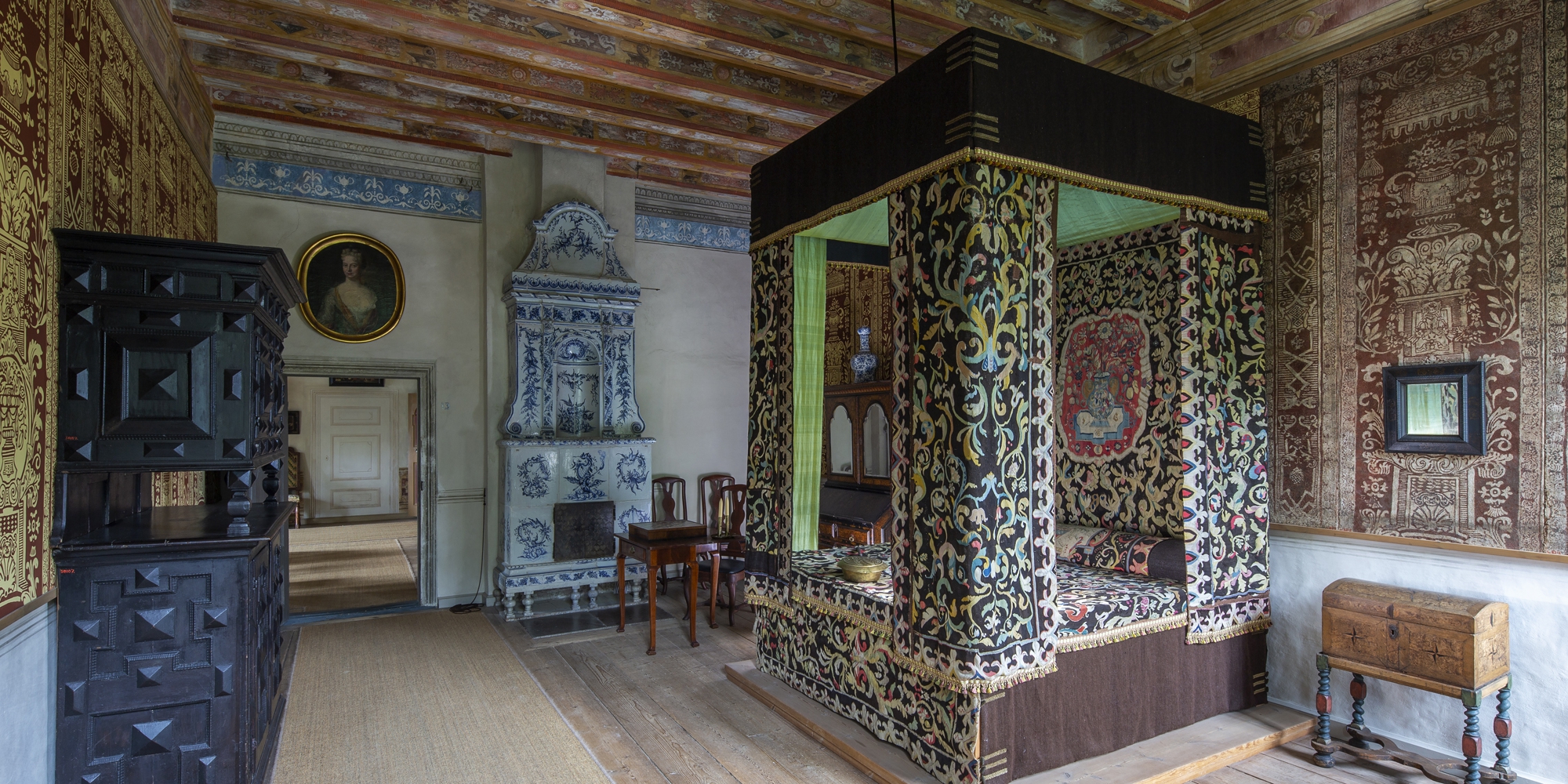
Converting this stately room into a bedroom was a logical choice, as it was adjacent to a small cabinet, a feature that was always associated with the grand bedrooms of the 17th century. Guests were received in the ceremonial bedroom. The adjoining cabinet, on the other hand, was a private space where one could retreat in peace from the formal ceremonies of courtly life. The cabinet could also serve as a study. It could be used, for example, to store collections of art or curiosities.
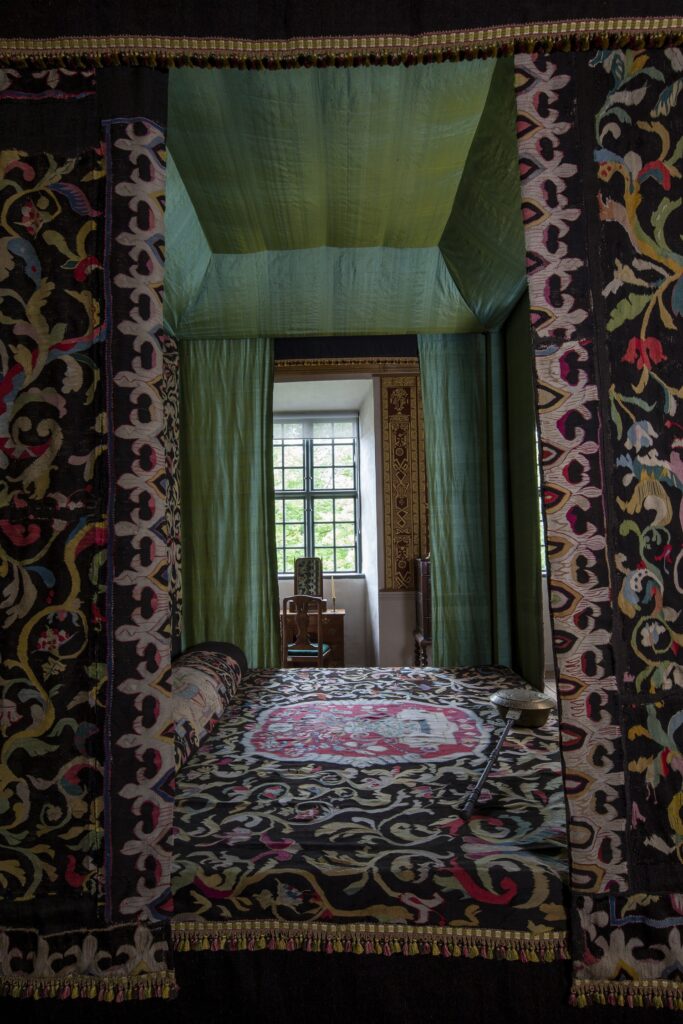
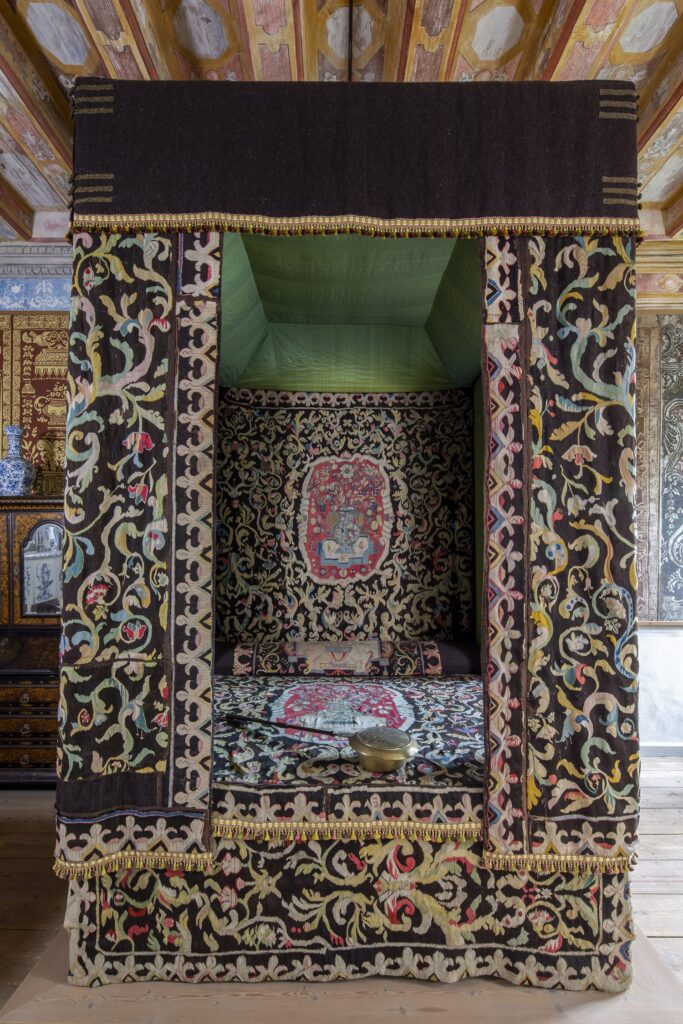
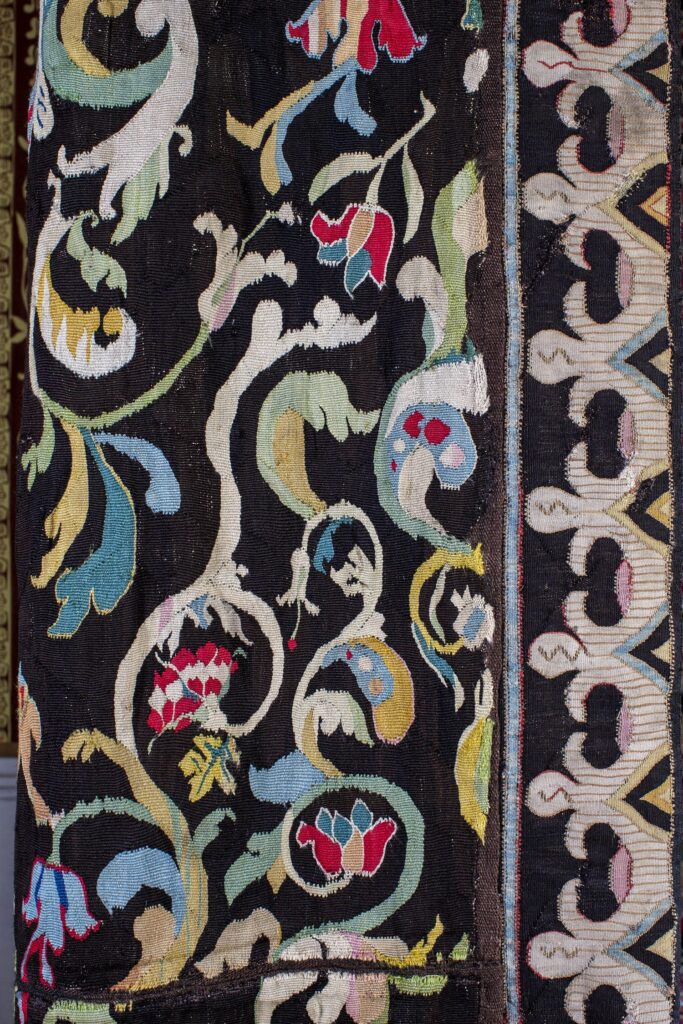
The focal point of the room is the canopy bed with its curtains. The magnificent bed, adorned with precious curtains, was designed to be as impressive as possible. Textiles were a valuable part of the furnishings, so the curtains of this large bed were a sign of its owner’s wealth and social status. The bed curtains from the early 18th century on the canopy bed at Louhisaari originate from the Sjögard Manor in Pernaja and are the only surviving Baroque bed curtains in Finland. Their floral motifs feature vases of flowers typical of the Baroque style.
In the 17th century, the room was painted with magnificent decorative murals. The ornamentation painted on the ceiling, which has survived only partially, consists of octagonal and elongated panels that once featured painted landscapes.
This English Queen Anne-style cabinet clock from the early 18th century bears the maker’s mark: John Wass, Hull. Both the clock cabinet and the small corner cabinet are decorated in a style imitating Indian lacquerware. Lacquerware items such as screens and wooden boxes, imported from the Far East to Europe in the early 17th century, inspired European cabinetmakers to imitate their surface treatment techniques, often adapted to European forms.
In the 17th century, a small chest placed beside the bed, known as a “night chest,” was used to store small valuables and toiletries, which were often made of precious materials as well. A brass bed warmer was used to warm cold sheets; the container was filled with charcoal and moved between the bedding. The chairs upholstered in black leather are from Louhisaari.
The Rococo tiled stove, featuring bold cobalt-blue painted decorations, dates from the mid-18th century. The stove’s decorative motifs include Rococo cartouches and scenes from the Bible. The stove originates from the Karuna estate. It was apparently brought to Louhisaari by Count Carl Robert Mannerheim.
In Carl Erik Mannerheim’s estate inventory from 1837, the room is mentioned as the “young count’s room,” that is, Carl Gustav Mannerheim’s room. In 1867, the room is referred to as “the count’s chamber,” that is, “the father’s room” (Carl Robert Mannerheim’s). In the 17th century, a door led from this room into the hall.