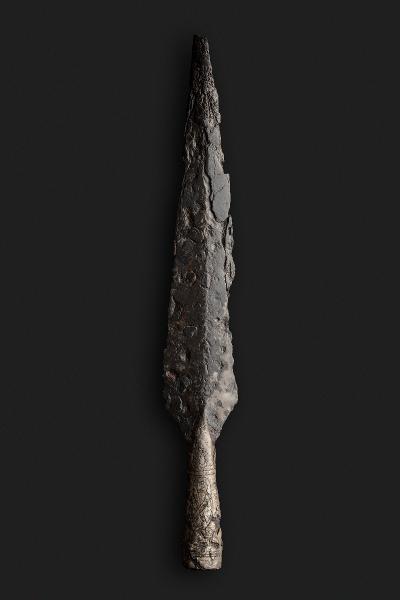
A large number of spearheads have been found in Iron Age settlements and graves in Finland and Sweden. Spears seem to have been very common in the era. Spears served as hunting and fighting weapons, and there were several different types of them. In the Viking Age (ca. 800–1050 CE), the spear also became a permanent part of the burial of arms. The iron spearhead was found in 1984 in Kirkkomäki, Turku, at the bottom of a grave during the excavation of the late Iron Age cemetery.
The spearhead from Kirkkomäki is of Petersen type G. The spearhead is a dagger-like, straight blade and slightly ridged. At the bottom of its shaft tube is a dragon pattern, which is a typical decorative motif in late Iron Age spears. By contrast, the small insect depicted at the top of the shaft tube, above the dragon pattern, is a more unusual decorative motif. There is still some of the wooden spear shaft left in the shaft tube.
KM22631:59
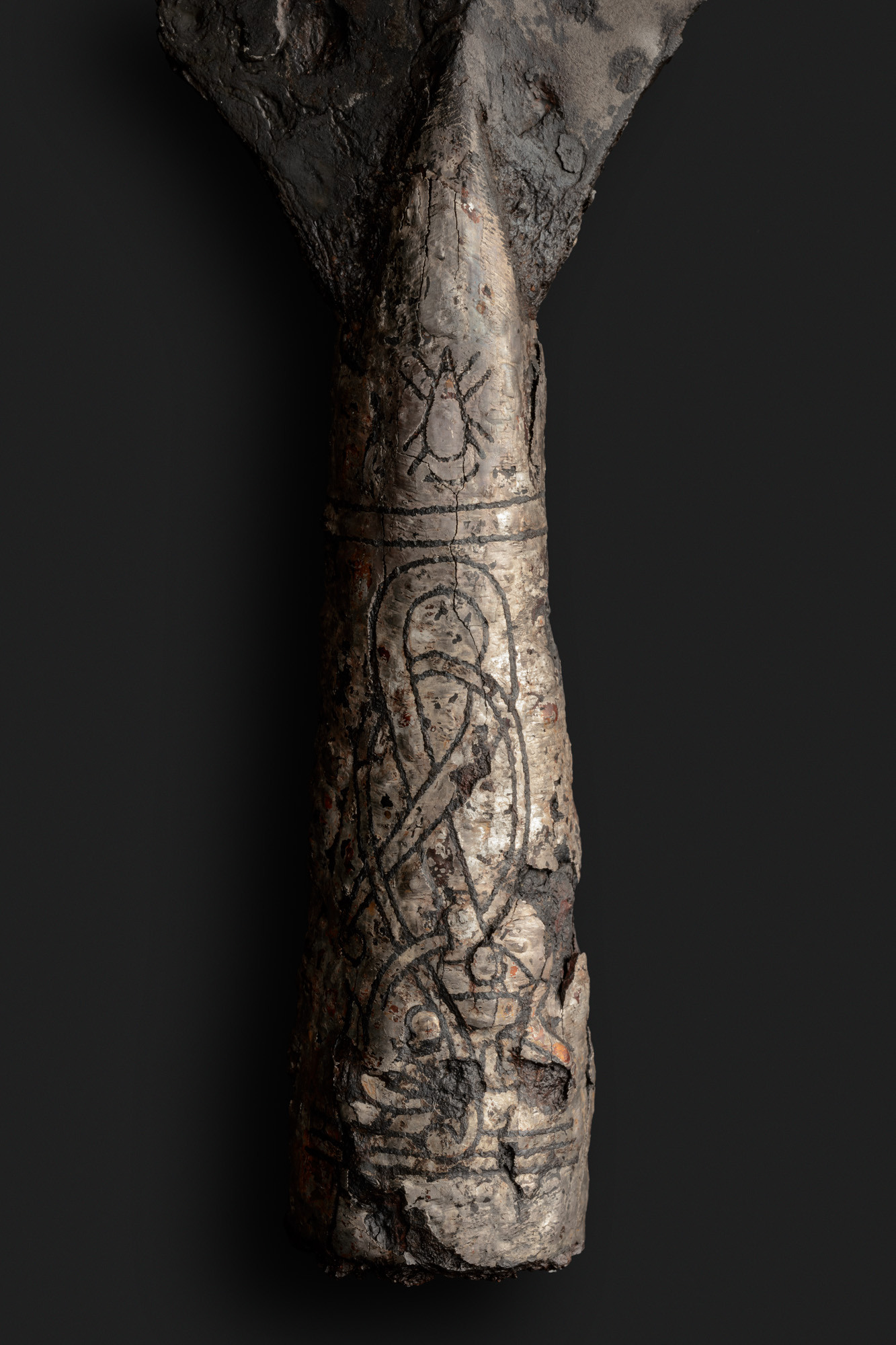
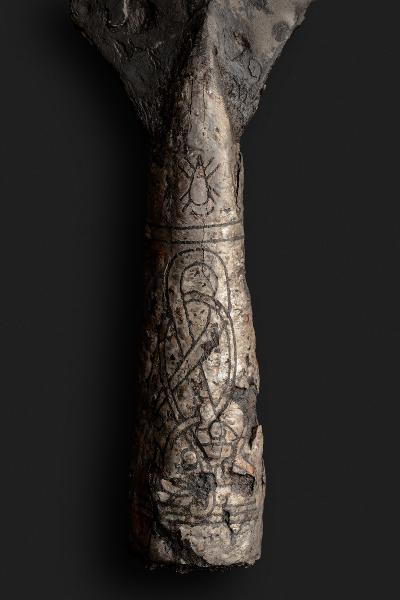
Rautainen keihäänkärki, pahoin ruostunut, kärki katkennut, Petersenin G-tyyppiä. Varsiputkessa hopealevykoristelu, jossa näkyvissä yläosassa hyönteinen ja alaosassa lohikäärme. Lehti tikarimainen, suorateräinen ja heikosti harjava, yli 2/3 koko pituudesta, putki lievästi kohti vartta levenevä, pituus 385 mm. Lehti kannassa 59 mm leveä. Puuvartta jäljellä. Koordin x0498.20-54; y=158.00-18; z=440-. Sijaitsi haudan koillispäässä haudan suuntaisesti kärki kohti koillista (arkun kaakkoisreunaa vasten) haudan pohjalla.
Mitat
- pituus: 385,0 mm
- leveys: 59,0 mm
Materiaalit
- metalli/rauta
Tekniikka
- käsityö
Objektinumerot
- objektinumero: KM22631:59
Valmistus ja käyttö
Valmistusaika: 800 - 1050
Löytöpaikka: Turku, Kaarina, Kirkkomäki
Näyttelyt
- Esihistorian perusnäyttely 1.4.2017 -
- Esihistorian perusnäyttely 1995 - 2015
- Esihistorian perusnäyttely 2027 (perusnäyttely)