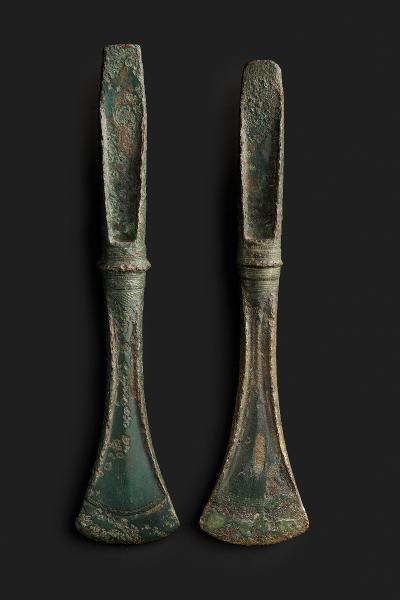
Two narrow-headed bronze axes were found in Tapaninkylä, Helsinki, in the 1840s. The axes are among the finest bronze objects in Finland. They are decorated with various line, dot and spiral patterns. This type of bronze axe is called a palstave. These axes are of the Danish type and date from approximately 1500–1300 BCE based on typology. Palstaves have flanges above the blade for attaching a wooden handle. Palstaves were made from bronze by casting into a mould and were suitable for both working and fighting.
The axes of Tapaninkylä were found as a pair near the Bronze Age shoreline. Bronze objects sacrificed in pairs in Scandinavia and Central Europe have been associated with the Bronze Age cult of divine twins, but it is very uncertain whether the axes of Tapaninkylä can also be associated with this same belief.
KM72:1a-b
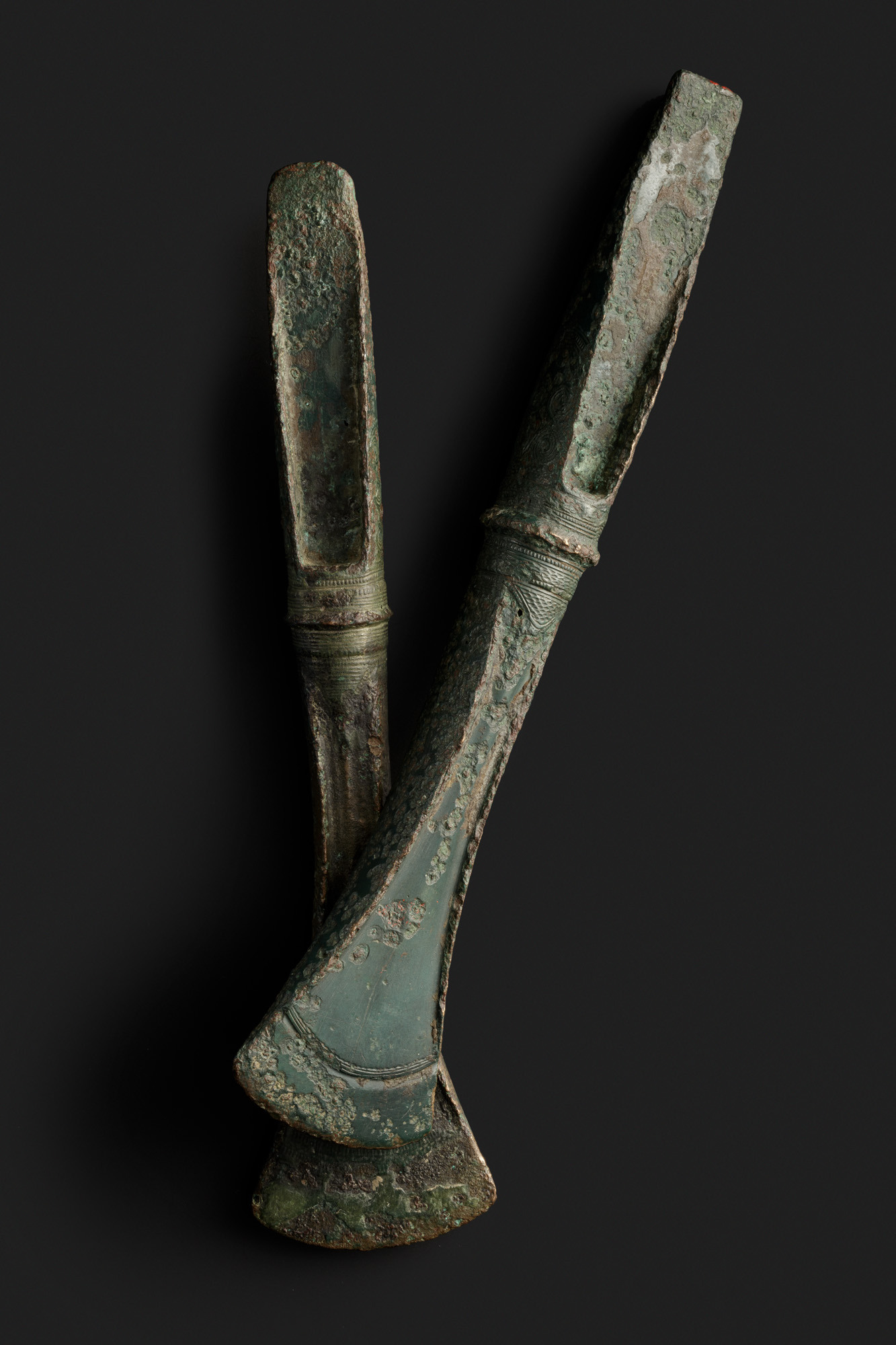
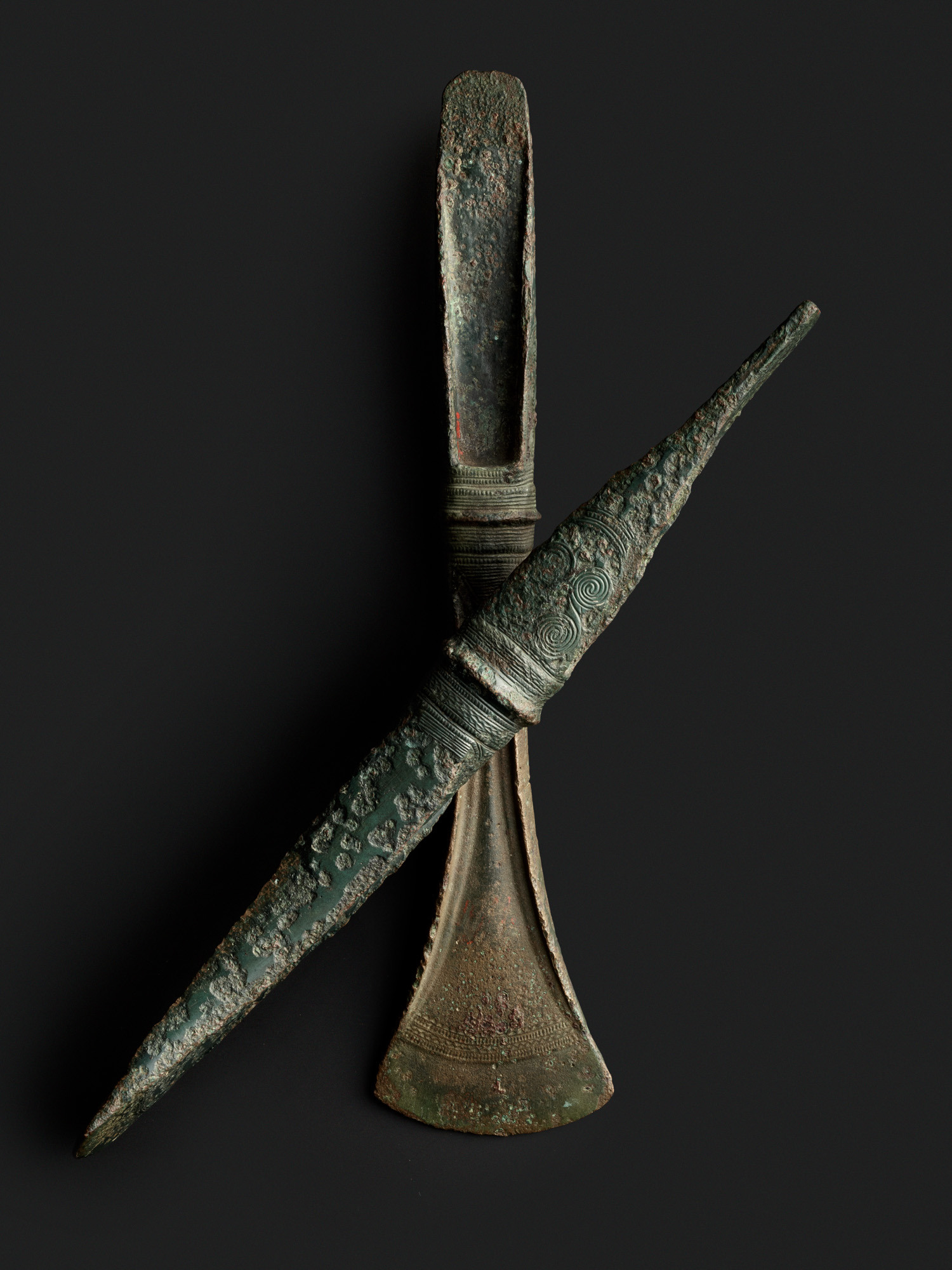
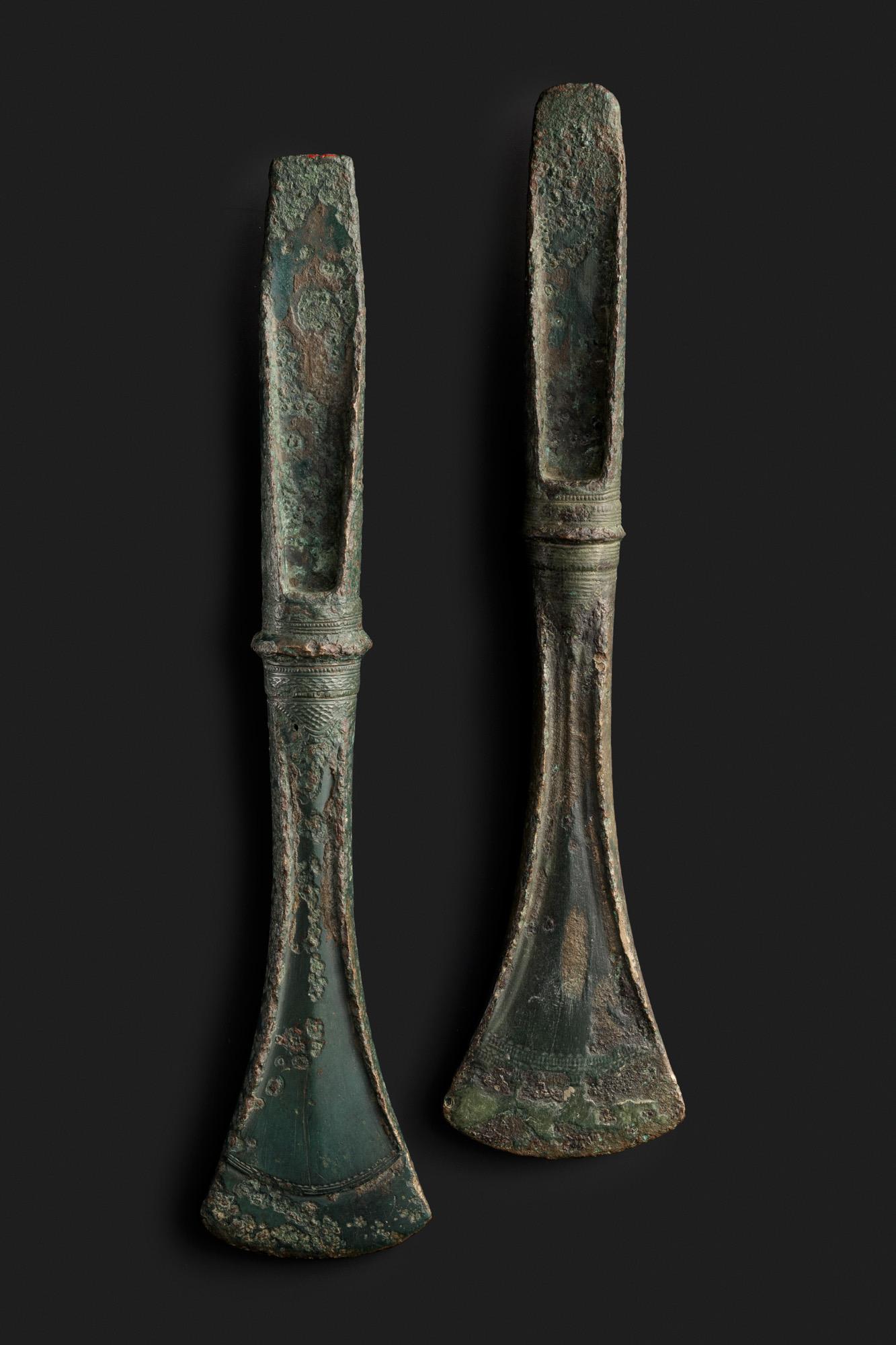
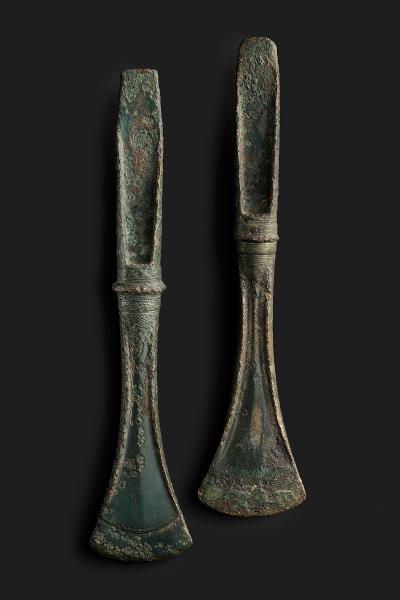
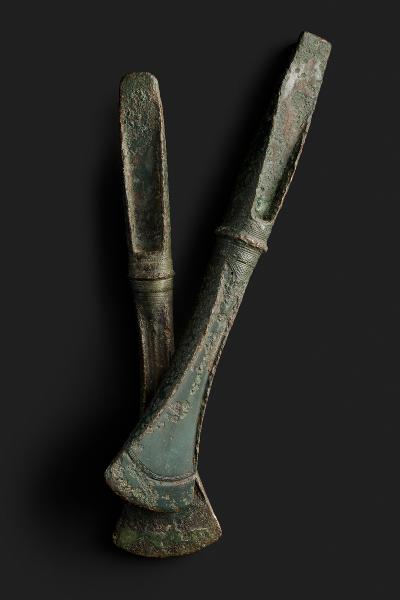
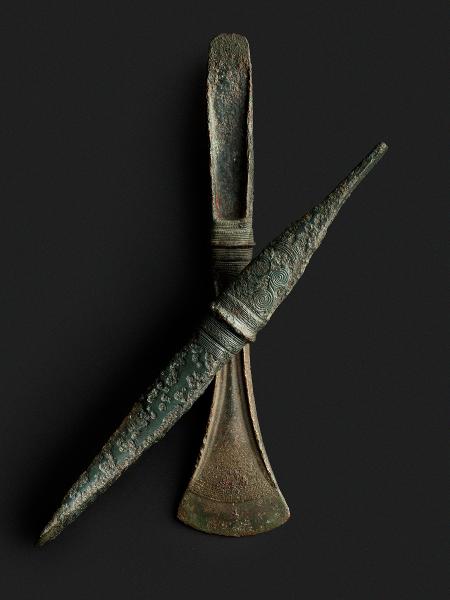
Pronssinen olkakirves, joka on löytynyt kaivettaessa soramäkeä Helsingissä Tapanilan Rasissa. Kirves (kanta pyöristetty) on koristeltu viivoin, spiraalein ja kulmaviivoin, ja sitä voidaan pitää pohjoismaisen pronssikauden hienoimpana esineenä Suomessa. Löytöpaikka, röykkiö soramäellä, lienee aiheuttanut esineen pinnan epätasisuuden. Ver. Kirja, s. 53, Holmbergin Finska Fornt., fig. 65; Aspelin, Alkeita, fig. 55, Antiquités, fig. 400; Reinholmin luett. s. 26. Färlingin kat., n. 1910 ja 1911. Löytö on nähtävillä Suomen kansallismuseon esihistorian perusnäyttelyssä.
Mitat
- pituus: 235,0 mm
Materiaalit
- metalli/pronssi
Tekniikka
- käsityö
Objektinumerot
- objektinumero: KM72:1a
Valmistus ja käyttö
Valmistusaika: -1800 - -500
Löytöpaikka: Helsinki, Tapaninkylä
Näyttelyt
- Esihistorian perusnäyttely
- Esihistorian perusnäyttely 1.4.2017 -
- Esihistorian perusnäyttely 1995 - 2015
- Esihistorian perusnäyttely 1.4.2017 -
- Esihistorian perusnäyttely 2027 (perusnäyttely)