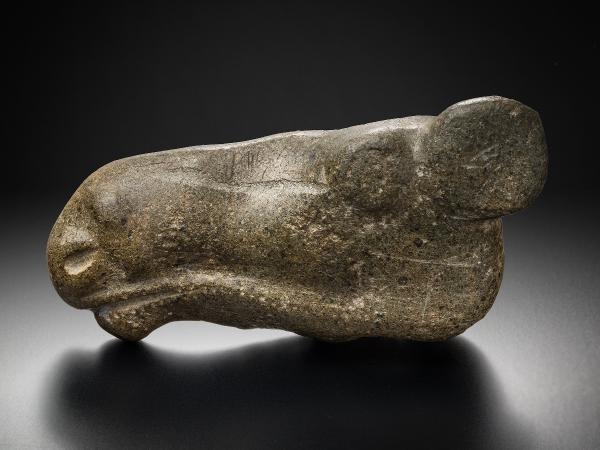
In the Stone Age, the elk was an important animal that was depicted in both rock art paintings and objects. Objects decorated with elks’ heads had a special significance for people of the Stone Age. One of the most famous animal head weapons found in Finland is the Elk’s Head of Huittinen, which dates back to the Mesolithic Stone Age.
The elk’s head was found in a Stone Age settlement in Palojoki, Huittinen. Based on the radiocarbon dating of a stove, the settlement dates back to approximately 6100 BCE (cal). The artfully carved object was probably modelled after a killed young elk about one year old. It is made of soapstone, which is soft and easy to work on, and has been carefully finished by grinding. The sculpture has a hole for fitting a handle, so it may possibly have been used as a staff or club. However, due to its soft stone material, the object was not suitable for use as a weapon or tool, so it was probably a valuable item.
KM6292:1
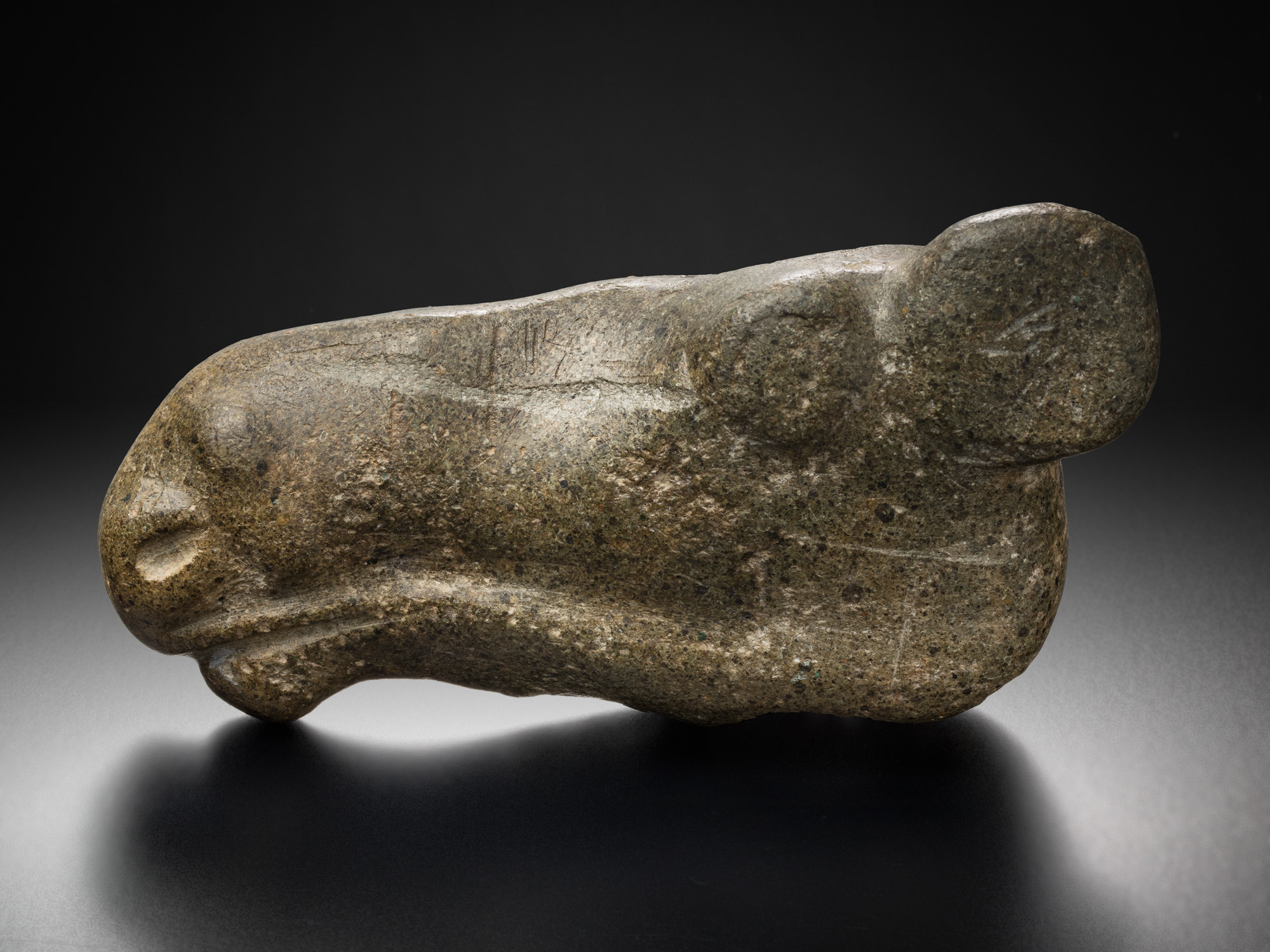
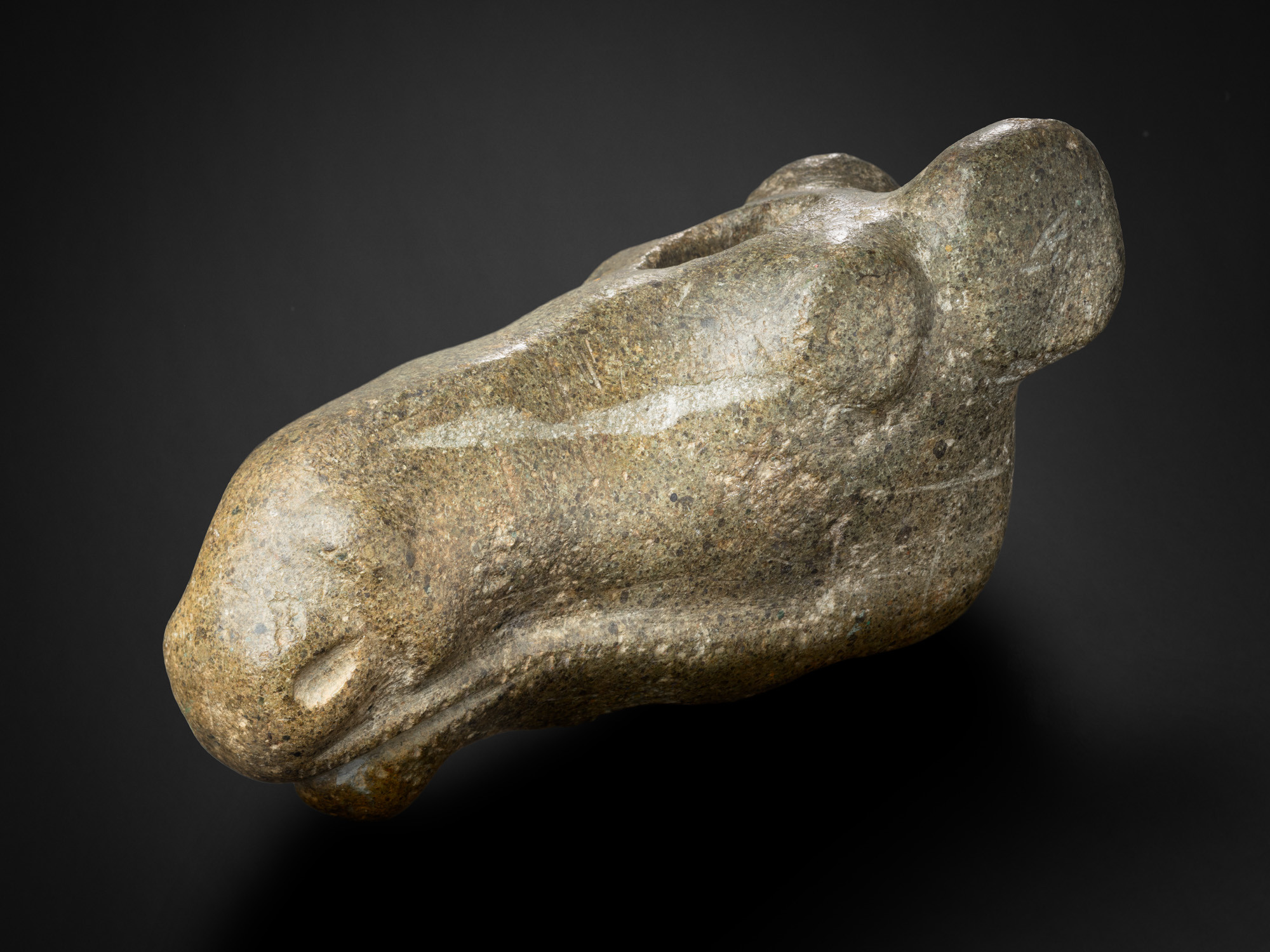
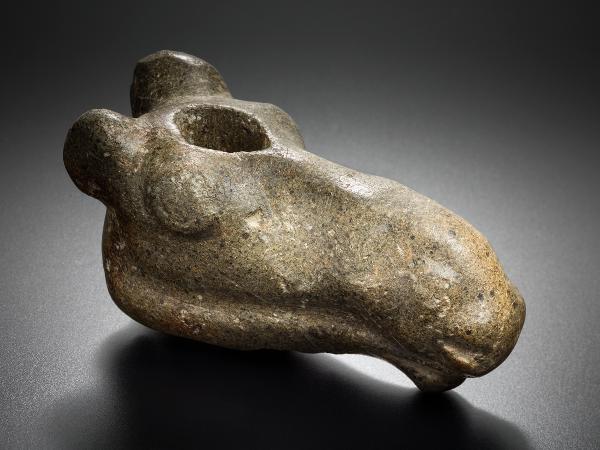
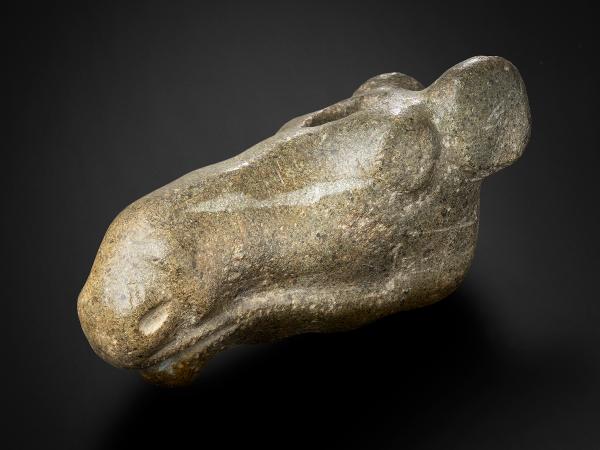
Hirvenpään muotoinen kiviesine, vuolukivestä, Turun museon johtokunnan 27.3.1913 V. H. M:lle talletuksena luovuttama. Esine on löydetty Huittisten pitäjän Palojoelta. Vrt. lähemmin J. Ailion kirjoituksia: Ett praktvapen från stenåldern teoksessa Åbo Stads historiska museum ja Huittisten hirvenpää ase, Suomen Museo 1909.
Mitat
- pituus: 145,0 mm
- leveys: 81,0 mm
- korkeus: 58,0 mm
Materiaalit
- kivi/vuolukivi
Tekniikka
- käsityö
Objektinumerot
- objektinumero: KM6292:1
Valmistus ja käyttö
Valmistusaika: -8500 - -4500
Löytöpaikka: Huittinen
Näyttelyt
- Esihistorian perusnäyttely
- Bären Kult und Schamanen Zauber - Rituale früher Jäger
- Esihistorian perusnäyttely 1.4.2017 -
- Esihistorian perusnäyttely 2027 (perusnäyttely)