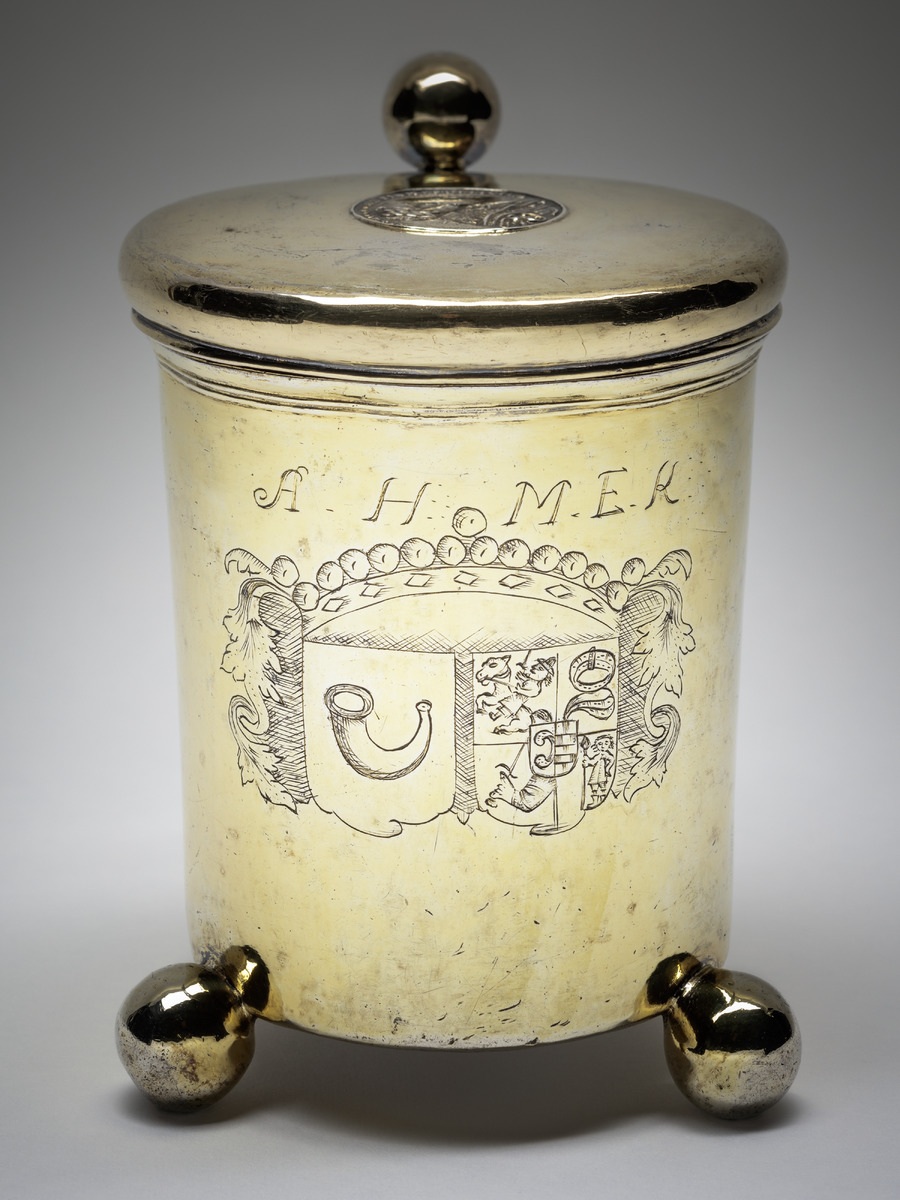
In 2018, a silver tankard dating from 1680 was added to the collections of the National Museum of Finland. Behind the tankard lies an interesting story about 17th-century gentry life, marriages and the rules that people lived by – or broke. The story of the tankard is also linked to Karuna Church, which is now located on Seurasaari.
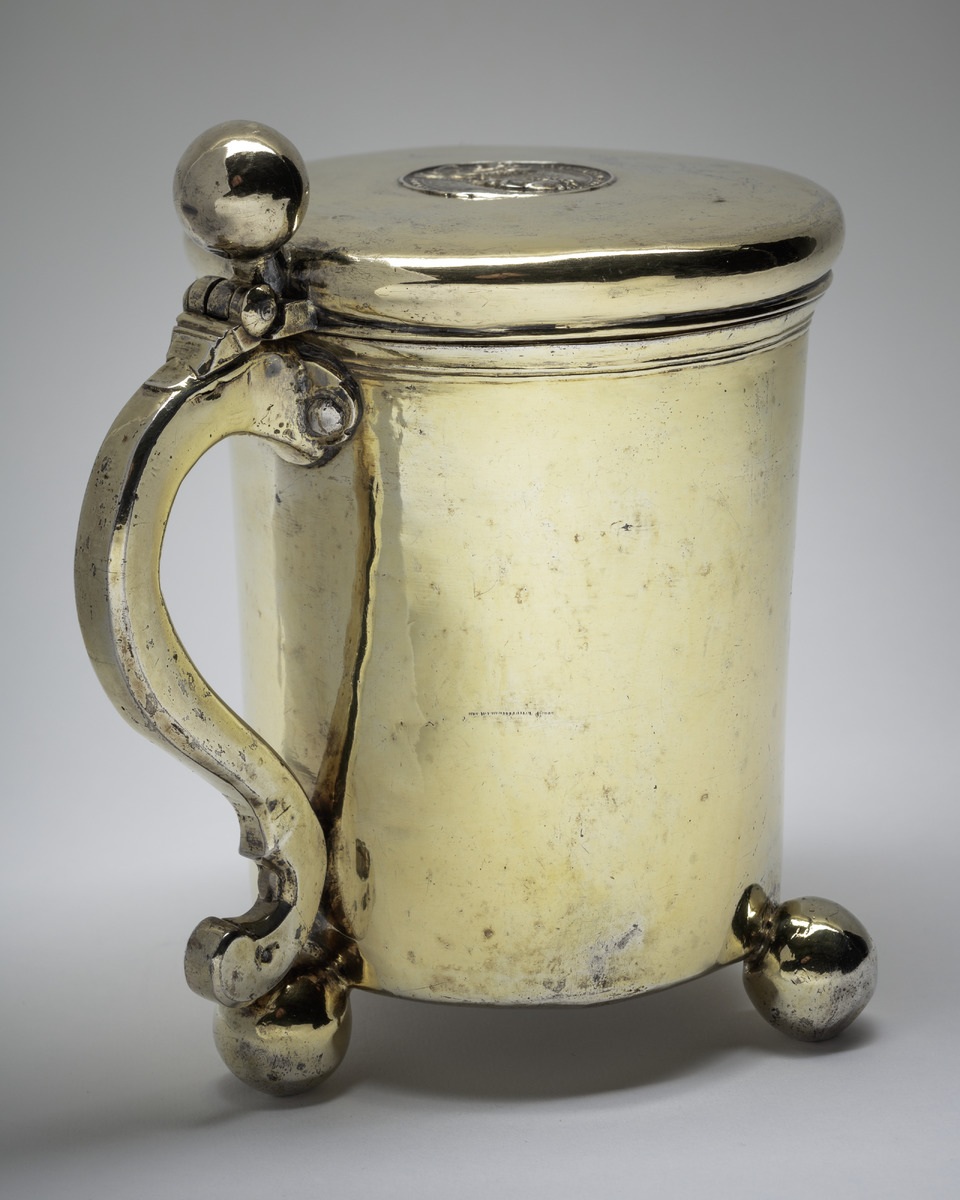
The silver tankard was crafted by silversmith Axel Hansson Båga in Turku in 1680. The tankard is associated with the wedding of Baron Arvid Horn af Åminne and Maria Elisabet Kruse af Kajbala, which was celebrated on 10 March 1680.
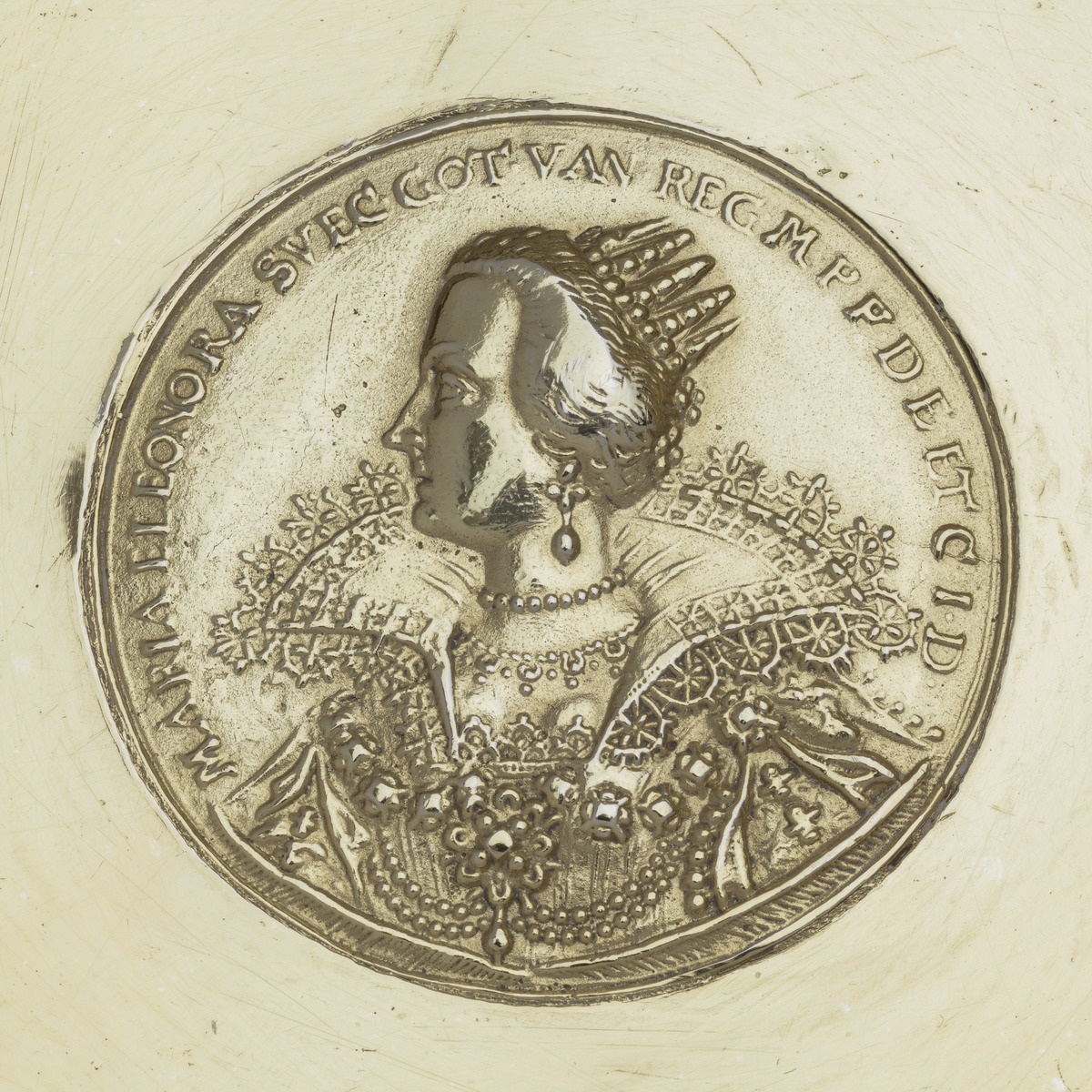
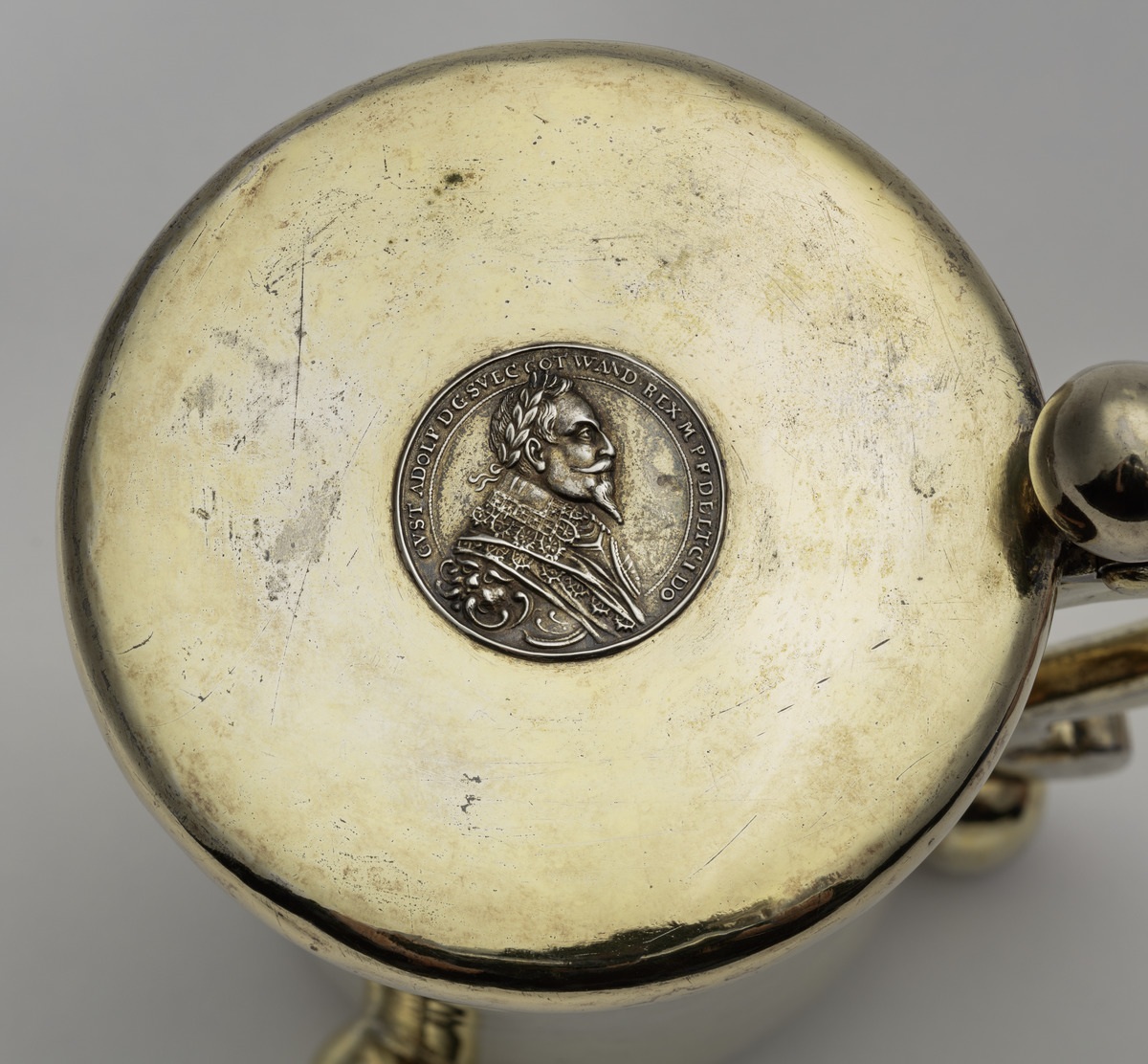
The coats of arms of the Horn af Åminne and Kruse af Kajbala families are engraved on the side of the tankard, below a baronial coronet. The initials A.H. and M.E.K. (Arvid Horn (1631–1692) and Maria Elisabet Kruse (d. 1697)) are engraved above the coats of arms, while the lid of the tankard is embedded with a commemorative coin of Gustav II Adolf and Maria Eleonora, with an armoured bust of Gustav II Adolf on the obverse and a bust of Queen Maria Eleonora on the reverse.
It was the second marriage for both of them. On their wedding day, the bridegroom was 49 years old and the bride was about 31 or 32; Maria Elisabet’s exact date of birth is unknown. The 1680 wedding was conducted in an appropriate manner, but Arvid Horn had gained a questionable reputation due to his first marriage, which had taken place 22 years earlier.
Photos
Silver tankard from 1680. Photo: Ilari Järvinen, Finnish Heritage Agency.
The commemorative coin featuring Gustav II Adolf and Maria Eleonora on the lid of the silver tankard. Photo: Ilari Järvinen, Finnish Heritage Agency.
Arvid and Ingeborg – a scandal at Laakspohja Manor in Lohja
Arvid Horn’s first marriage in 1658 took place under anything but appropriate circumstances. Arvid Horn, then 27, wanted to marry his cousin, Ingeborg Gyldenär. Ingeborg’s date of birth is not known, but she was probably about the same age as Arvid. Ingeborg was already a widow, having been married for three years, from 1654 to 1657, to Lieutenant Antonius Creutzhammar, who had died in battle in Lithuania in 1657. Arvid Horn’s father did not approve of the marriage, partly because of the couple being so closely related, but perhaps also partly because of the background of Ingeborg’s father, Johan Gyldenär. Johan Gyldenär was originally a commoner who had married the noblewoman Elin Horn in 1624, also under somewhat questionable circumstances.
Arvid Horn applied for permission for the marriage from the cathedral chapter. However, the chapter stated that the marriage required the king’s permission. Tired of waiting, Arvid Horn kidnapped his bride and took her to Laakspohja Manor in Lohja, where the couple lived unmarried for one winter. Despite his various attempts, Horn was unable to arrange an official wedding ceremony, so he ended up kidnapping pastor Stigaeus and taking him to Laakspohja. The pastor was only released after promising to marry Arvid to Ingeborg. The wedding met the formal requirements but did not receive public approval. The Court of Appeal also took up the case, and the Cathedral Chapter of Turku ruled that the marriage must be declared unlawful. However, Arvid and Ingeborg remained married, presumably after paying some kind of fine to settle the matter. As a punishment imposed by the church, the couple was not allowed to sit in the front pew of the church or take communion.
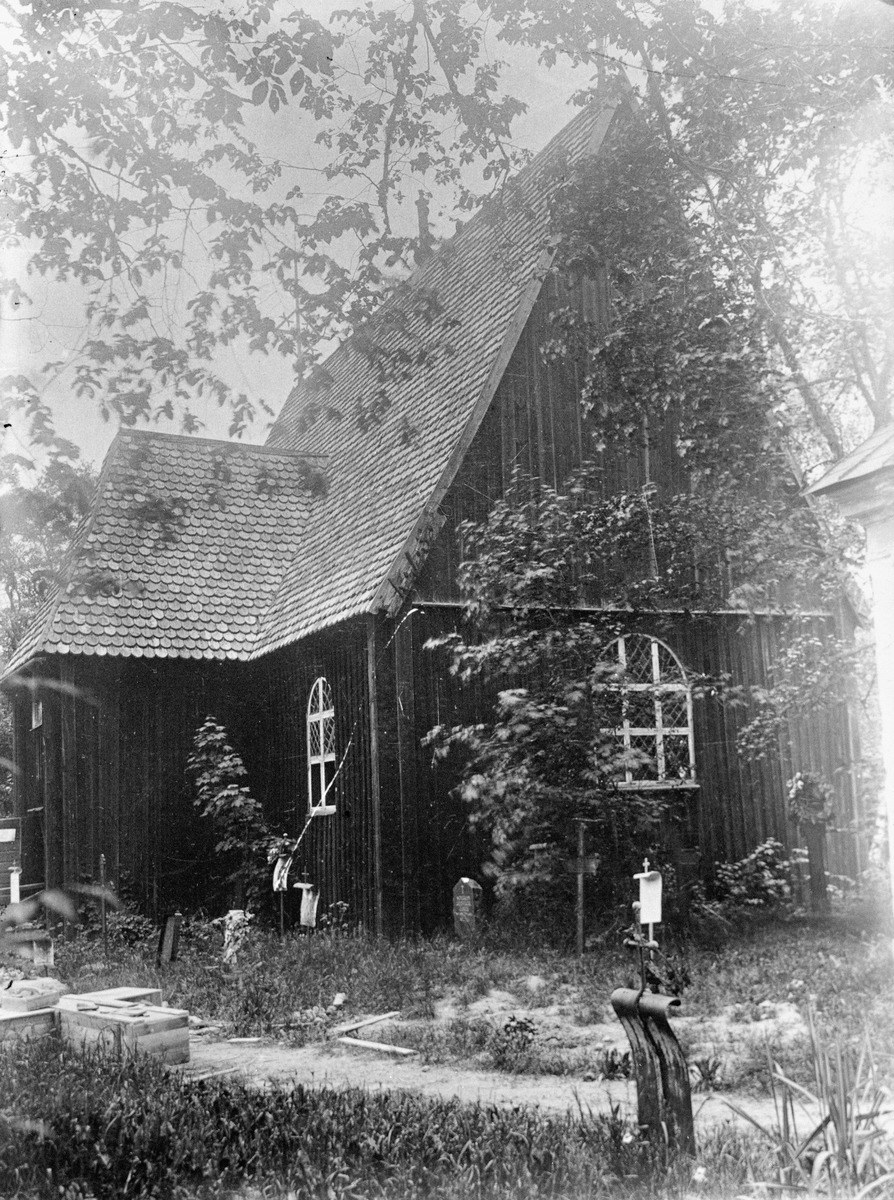
Karuna Church in its original place in Karuna. Photo: A. O. Heikel, before 1912.
Arvid Horn and Maria Elisabet Kruse
Arvid and Ingeborg’s marriage lasted about twenty years and ended with Ingeborg’s death in the late 1670s. Arvid found a new bride within the family once again; this time, it was Maria Elisabet Kruse af Kajbala, the daughter of his other cousin.
Arvid Horn and Maria Elisabet Kruse were married on 10 March 1680. This time, the king’s permission had been sought for the marriage. This was also Maria Elisabet’s second marriage. Both had children from their previous marriages: Arvid Horn had four sons and two daughters with Ingeborg, and Maria Elisabet had one daughter with her first husband, Bernt Johan von Gertten. The fact that Maria Elisabet’s first husband had died in battle in Landskrona in 1677, just as Ingeborg’s first husband had 20 years earlier in Lithuania, attests to the warlike nature of the Swedish Empire in the 17th century.
Although some time had passed since the events surrounding Arvid’s first marriage, and the new marriage was contracted with the king’s permission, the church apparently still upheld its restrictions on the couple, such as their seating arrangements. It is said that this infuriated Arvid Horn to such an extent that he decided to have a church built on his estate in Karuna, where he could sit wherever he pleased and decide on matters in general. As a result, a church was completed in Karuna in 1685. Horn had the right of patronage over his church, meaning that he had the authority to decide who would become a priest there. However, the church was not just for the private use of Karuna Manor; it was intended for everyone. The church was named Maria Elisabet, apparently partly in reference to Maria Elisabet Kruse and partly because of a large painting in the church depicting Mary and Elizabeth. Arvid Horn and Maria Kruse donated several works of art and other objects to the church, and their coats of arms (as well as that of Ingeborg Gyldenär) adorn the canopy of the pulpit. Karuna Church was moved to Seurasaari in 1912, where it is still open to the public as part of the open-air museum.
Arvid Horn had time to enjoy his own church for seven years before his death in 1692. Maria Elisabet followed her husband only five years later in 1697. The couple had one child together, Krister Arvidsson Horn, who eventually inherited Karuna Manor.
The silver tankard will be on display in the National Museum’s renewed permanent exhibition in 2027.
Satu Frondelius
Literature
Patrik Jensen-Eriksen: Epätoivottu kosija. Johan Gyldenärin tausta ja hänen avioaikeensa 1620-luvulla. Maisterintutkielma, Helsingin yliopisto, Humanistinen tiedekunta. 2023.