It has been a tremendous honour to work with these old pieces of tatreez. There is a sense that this work was done by a woman, decades ago in Palestine. When I handle the pieces, I think about the people who originally embroidered the fabrics, and their history. Tiina Al-Ani, 17 November 2025
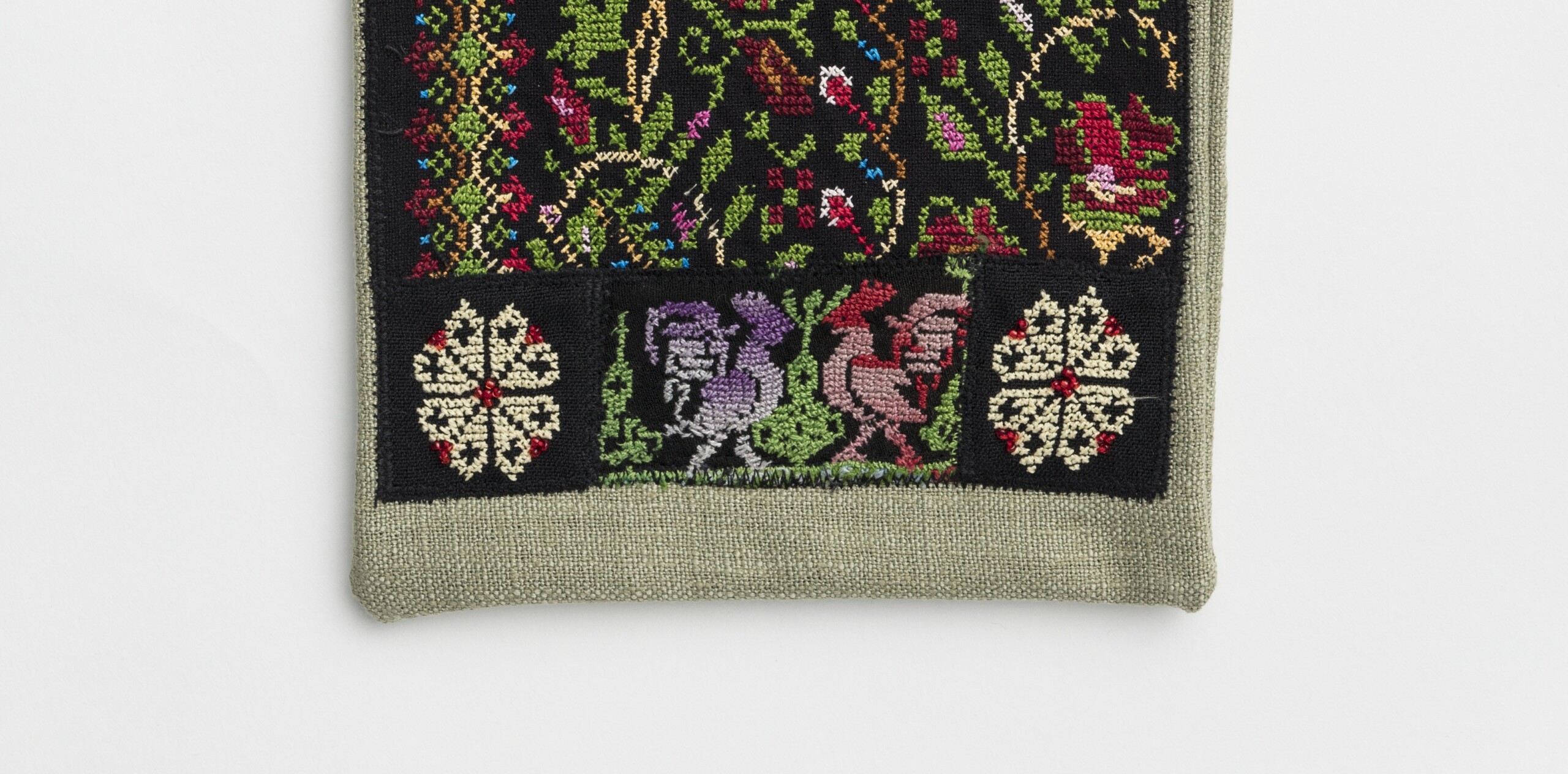
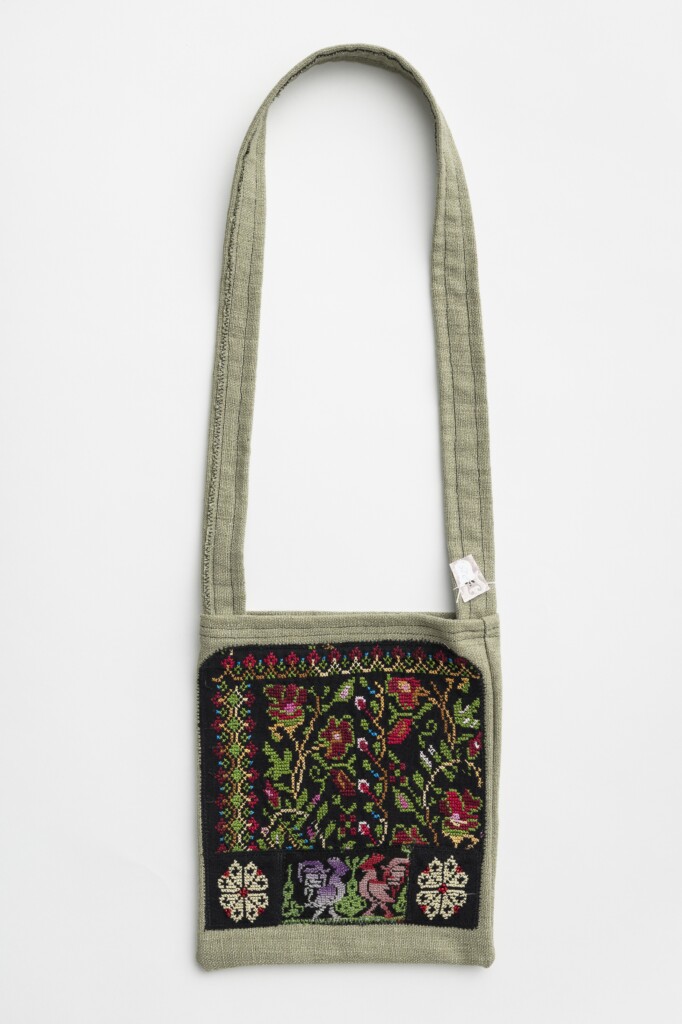
The small green canvas bag is made from a single-coloured fabric. It has a long strap and an open top. Patches of tatreez embroidery, cut from old Palestinian textiles, have been sewn onto the front of the bag. A small piece of paper attached to the bag’s strap bears the price “EUR 50”. Tiina Al-Ani, a member of the Freedom Crocheters (Vapauden virkkaajat) craft club, made the bag with the intention of selling it to raise funds for Gaza.
A Bag Full of Symbols
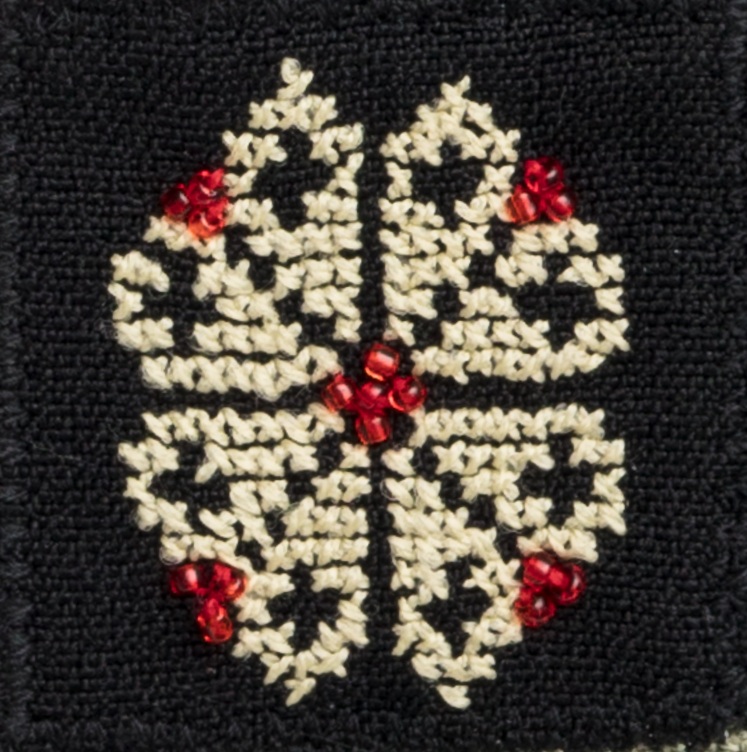
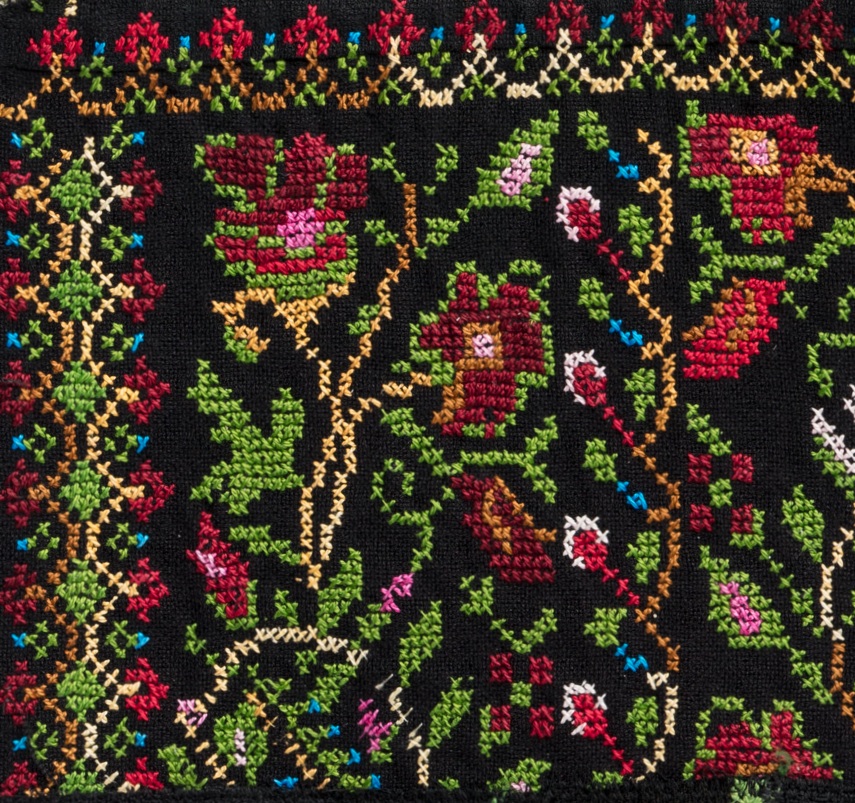
Tatreez is a traditional Palestinian embroidery technique with patterns that carry a wide range of meanings. Tatreez encompasses several embroidery techniques, one of the most common being cross-stitch. The white eight-pointed motifs at the bottom of the bag are known in Palestine as the Moon of Bethlehem. Similar patterns appear in many cultures under different names; in Finland, the motif is known as the kannuksenpyörä, or “spur rowel”. White embroidery is less common in tatreez and is associated with meanings such as purity and peace.
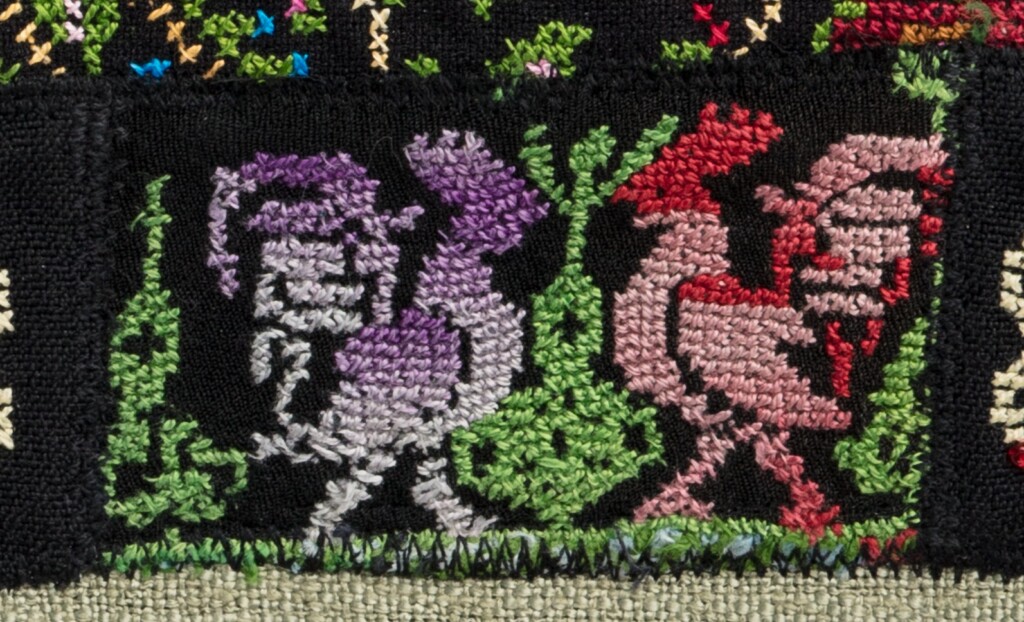
Between the motifs are two roosters, positioned on either side of a small stylised tree of life. The rooster is an old motif that may once have indicated a person’s religious identity. The tree of life is a symbol familiar across many cultures and is associated with ideas of renewal and the continuity of life. The patches also feature various plant-inspired motifs. Floral imagery in particular may have been associated with fertility.
Protected Cultural Heritage
Palestinian tatreez is a traditional folk art used to decorate clothing and household textiles. Beyond its decorative function, the embroidery also carries cultural, social and historical significance.
Tatreez consists of numerous motifs, each with its own name and symbolism. The patterns may refer to plants, animals, historical events or geographical locations. The colours and patterns used may once have revealed aspects of the wearer’s background or social status, although meanings have varied between regions, communities and historical periods.
Tatreez also has a strong social dimension; it has served as a means of passing on knowledge from one generation to the next, particularly among women. Today, tatreez is also used as a political statement and a form of activism, both in the Palestinian territories and throughout the diaspora. Palestinian tatreez was inscribed on UNESCO’s List of the Intangible Cultural Heritage in 2021.
Reusing Old Textiles
The fabric patches sewn onto the bag come from a collection of old Palestinian textiles assembled by Tuulikki Haddadin, who lived in Jordan from 1968 to 2014 and carried out her life’s work there.
The textiles originate from the Baqa’a refugee camp, established on the outskirts of Amman in 1968, where women sold worn-out dresses to supplement their income. Haddadin did not acquire the textiles with the intention of creating a collection, but rather through her interest in handicrafts and her desire to support the makers of the fabrics and their livelihoods. By donating the textiles to Freedom Crocheters, she hoped to support the preservation and visibility of Palestinian cultural heritage while also enabling the materials to be reused for humanitarian purposes.
Craft Activism and Solidarity
The bag was made by the Helsinki-based Freedom Crocheters craft club, whose activities focus on craft activism, fundraising and solidarity with Palestine. Founded in 2024, the volunteer-run craft club operates in four cities, with groups meeting regularly. The driving force behind the club is a desire to take concrete action, strengthen Palestinian cultural heritage, and raise awareness and understanding of the situation in Gaza.
The handicrafts produced by the club incorporate many symbols and traditions associated with Palestine, including the colours of the Palestinian flag, the keffiyeh pattern, the watermelon symbol and the tatreez embroidery tradition. Proceeds from the sale of these products are used to support humanitarian aid efforts in Gaza. Participants emphasise the importance of collective action and hope that their activities convey the joy of helping others, a sense of hope, and the power of working together. Tiina, who made the bag, explains why she became involved:
As the situation in Palestine, particularly in Gaza, continued to deteriorate, I wanted to do something concrete. This seemed like a good way to help. I could put my craft skills to good use while also fulfilling my strong desire to make things by hand.
At the club, we share both our concerns about the state of the world and our enthusiasm for crafts. I always leave our weekly meetings feeling empowered.
Documenting Civic Activism in Museum Collections
In late 2025, the National Museum of Finland documented the activities of the Helsinki-based Freedom Crocheters craft club. Crafts produced by the club and their associated meanings, together with photographic documentation and background interviews relating to the club’s activities, were added to the museum’s collections. The aim of this documentation project is to increase understanding of grassroots activism in Finland and of how crafts can function simultaneously as cultural heritage, a means of building community, and a form of political and humanitarian action. The material can be accessed through Finna(ulkoinen linkki).
Rania Taina
Photos: Ilari Järvinen, Finnish Heritage Agency
Sources and further reading:
El Khalidi, Leila 1999: The Art of Palestinian Embroidery. Saqi Books.
Ghnaim, Wafa 2018: Tatreez & Tea: Embroidery and Storytelling in the Palestinian Diaspora.
Reini, Ida 2024: Palestiinalainen tatreez-kirjonta: langalla kerrottuja tarinoita identiteetistä ja vastarinnasta(ulkoinen linkki).
Tatreez Traditions(ulkoinen linkki)
UNESCO 2021: The Art of Embroidery in Palestine: Practices, Skills, Knowledge and Rituals(ulkoinen linkki).
Weir, Shelagh & Shahid, Serene 1988: Palestinian Embroidery. British Museum Publications Ltd.
Weir, Shelagh 2009: Palestinian Costume. Arris Publishing Ltd.