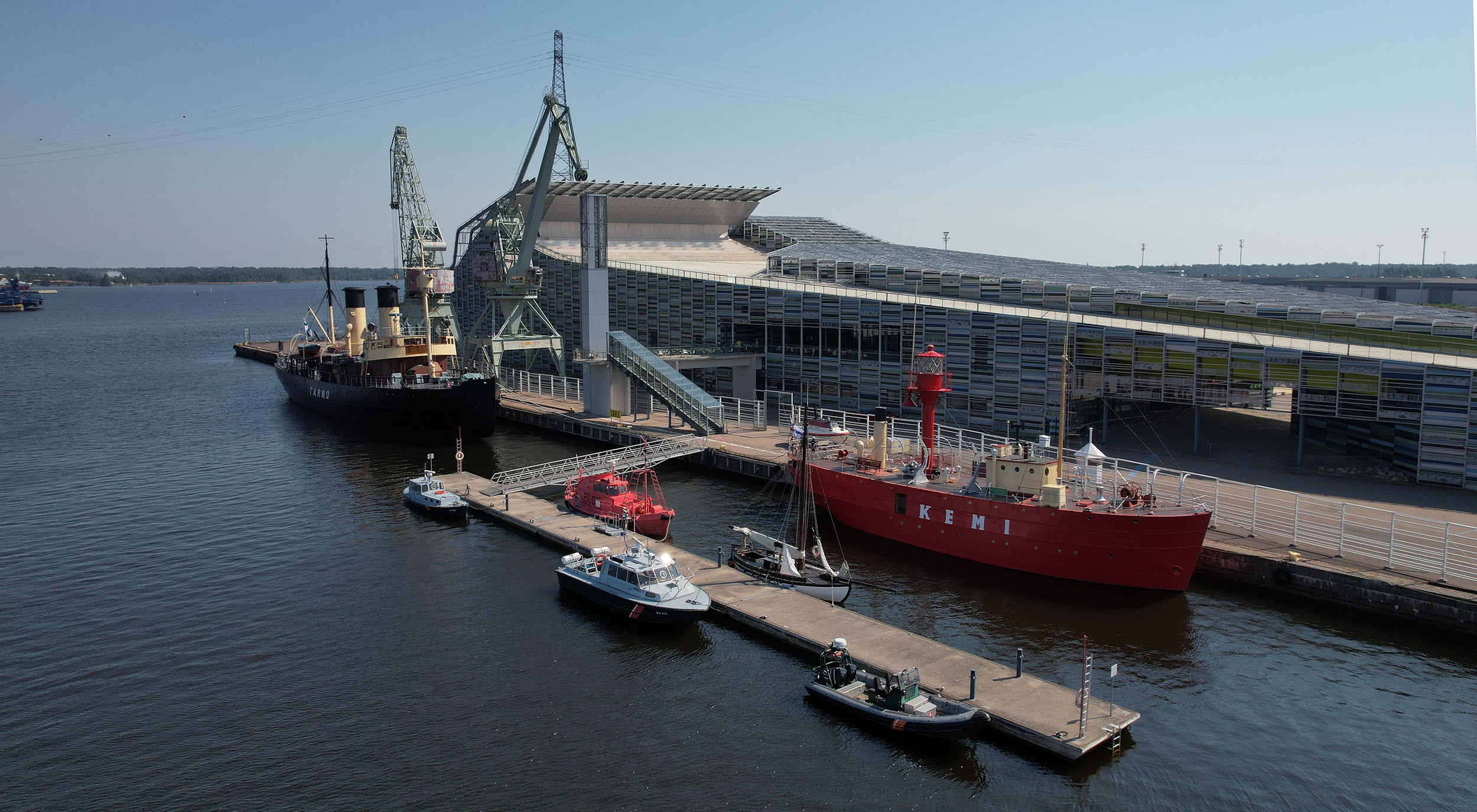
The Maritime Museum of Finland is a national maritime museum whose mission is to preserve the history of Finnish seafaring and to disseminate knowledge about it. The museum collects and preserves artefacts, photographs, archival material and literature relating to seafaring and boating. The museum is located in Kotka, at the Maritime Centre Vellamo(ulkoinen linkki).
The Maritime Museum of Finland is currently undergoing an exhibition revamp, and new exhibitions showcasing the sea and seafaring are being prepared for the main exhibition hall. The first exhibition in the revamp, will open in December 2026. The exhibition explores the sea as the foundation of life and presents surprising perspectives on the sea and life in it. Future sections focusing on seafaring will be opened in stages, with the next one scheduled for 2027.
The ‘Fateful Svensksund’ exhibition, a collaboration between the Maritime Museum of Finland and the Kymenlaakso Museum, tells the story of the largest naval battle in the Baltic Sea – which took place off the coast of present-day Kotka – and the fortified town built in its wake, in a way never seen before. This small border town served as the theatre for the conflict between the great powers of Russia and Sweden. Thousands of soldiers who sank to the seabed, astonishingly well-preserved shipwrecks and a thriving maritime fortress – the human destinies of the 1790s come to life. Forgotten stories resurface and resonate to this day.
The Maritime Centre’s boat hall displays vessels and artefacts from The Maritime Museum of Finland, the Kymenlaakso Museum and the Coast Guard Museum.
The Maritime Museum of Finland’s museum vessels – the icebreaker Tarmo, the lightship Kemi and the open-air exhibition space Kuuri – are open during the summer. The pilot boat Saimaa, part of the Maritime Museum of Finland’s collections, is open at the Riihisaari pier of the Savonlinna Museum during the summer. The Kymenlaakso Museum’s patrol vessel Telkkä is also on display at the Vellamo pier.
Gösta Sundman’s donation forms the foundation of the collections
The Maritime Museum of Finland opened to the public in 1981, but the process of building up collections for the museum had already begun in the early 20th century. At that time, the idea was to open a maritime history section within the future National Museum, for which consul Gösta Sundman donated maritime artefacts to the collections of the Finnish Antiquarian Society. The items donated by Gösta Sundman and others between 1906 and 1913 formed the so-called Nautica Collection, which includes navigational instruments, scale models, books, drawings and ship’s charts. Due to a lack of storage space, the collections were placed in the Helsinki City Museum’s storeroom, from where they were returned to The Maritime Museum of Finland in the 1970s.
After Finland gained independence, maritime historical material was added to the National Museum’s collections only sporadically, and the idea of a maritime history museum or department within the National Museum never came to fruition.
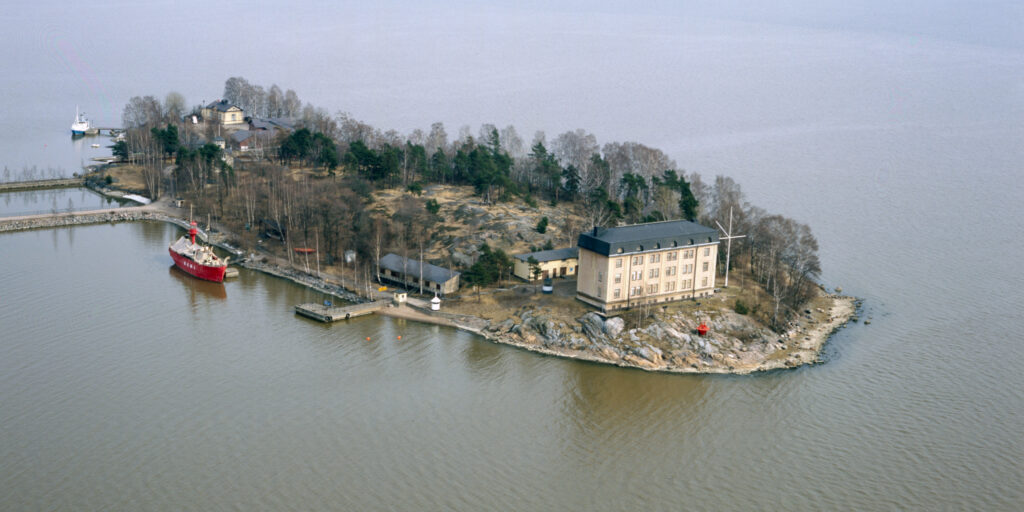
The Maritime Museum of Finland’s old primary exhibition at Hylkysaari
The primary exhibition at Hylkysaari presented the history of Finnish seafaring from prehistoric times to the present day. The theme of the first floor of the exhibition was the history of shipbuilding in Finland and the Nordic countries. The exhibits included, amongst other things, the Hauho church ship from 1609, scale models and various shipbuilding tools.
The second floor of the permanent exhibition focused on life aboard merchant ships. The exhibition featured, for example, a reconstructed late 19th-century sea captain’s workstation. Other themes included passenger shipping, steamships and winter navigation. Also on display were artefacts salvaged from two of Finland’s most famous shipwrecks: the St. Mikael, which sank in 1747, and the Vrouw Maria, which sank in 1771.
The third floor showcased the history of diving, but was otherwise reserved for temporary exhibitions. On the fourth floor, the remains of a 16th-century sewn boat, discovered at Mekrijärvi in Ilomantsi, were on display.
In the museum’s boat halls on Hylkysaari, working and pleasure boats from the late 19th century to the 1970s were on display. The working boat hall featured, amongst other things, Finland’s last post boat from the 1890s. The most impressive boat in the pleasure boat hall was the Kultaranta II, used by presidents at Kultaranta in Naantali, dating from the late 1920s.
The Maritime Museum of Finland in Kotka
The old, historically interesting pilot station on Hylkysaari was unsuitable for modern museum use, and the museum’s space requirements were discussed on several occasions. After many stages, on 1 April 2003 the Ministry of Education decided to relocate The Maritime Museum of Finland to Kotka, into a new building later named the Maritime Centre Vellamo.
In connection with the move, it was decided that maritime archaeological activities would remain in Helsinki at the Hylkysaari premises. Following an amendment to the Finnish Heritage Agency’s rules of procedure, marine archaeological activities were transferred from The Maritime Museum of Finland to the marine archaeology unit established within the Agency’s archaeology department. In addition to the marine archaeology unit, the waterlogged material conservation facility, which falls under the remit of The Maritime Museum of Finland, remained at Hylkysaari.
The staff of the Maritime Museum of Finland moved to new, purpose-built premises in Kotka in December 2007. The Vellamo Maritime Centre, with its exhibitions, opened to the public on 11 July 2008. Library and archive services were launched in stages between 2009 and 2010. In its first few years of operation, Vellamo has proved extremely popular with visitors.
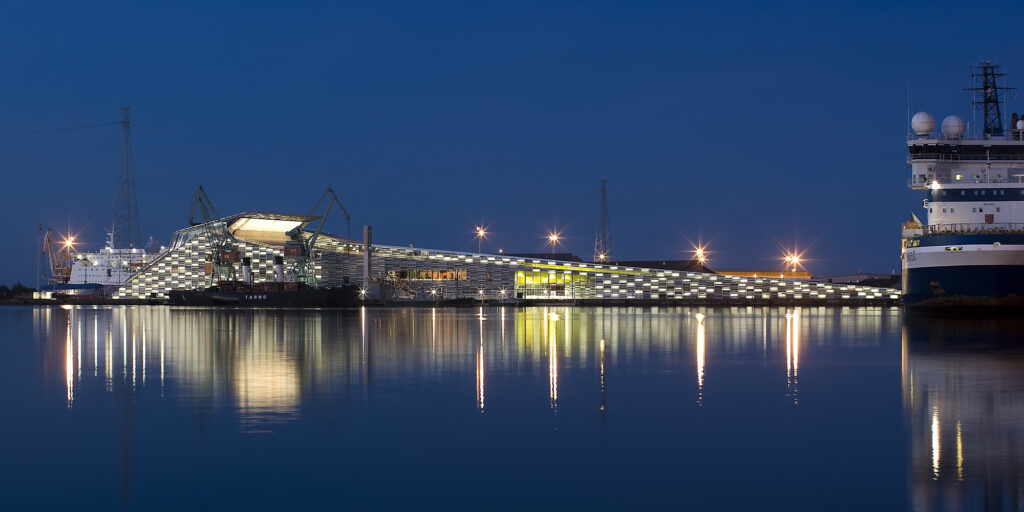
The Maritime Centre Vellamo
The Maritime Centre Vellamo houses the Maritime Museum of Finland, the Kymenlaakso Museum, the Vellamo Information Centre and the Kotka Cultural Affairs Centre. The building also contains teaching and seminar rooms, a 200-seat auditorium, the 100-seat restaurant Laakonki and the museum shop Plootu. Vellamo was designed by Lahdelma & Mahlamäki Architects Ltd, with architect and professor Ilmari Lahdelma acting as lead designer. Further information about the building can be found on the Vellamo Maritime Centre website.
You can also find Vellamo’s location and information on the history of the Kantasatama area on Vellamo’s website(ulkoinen linkki).